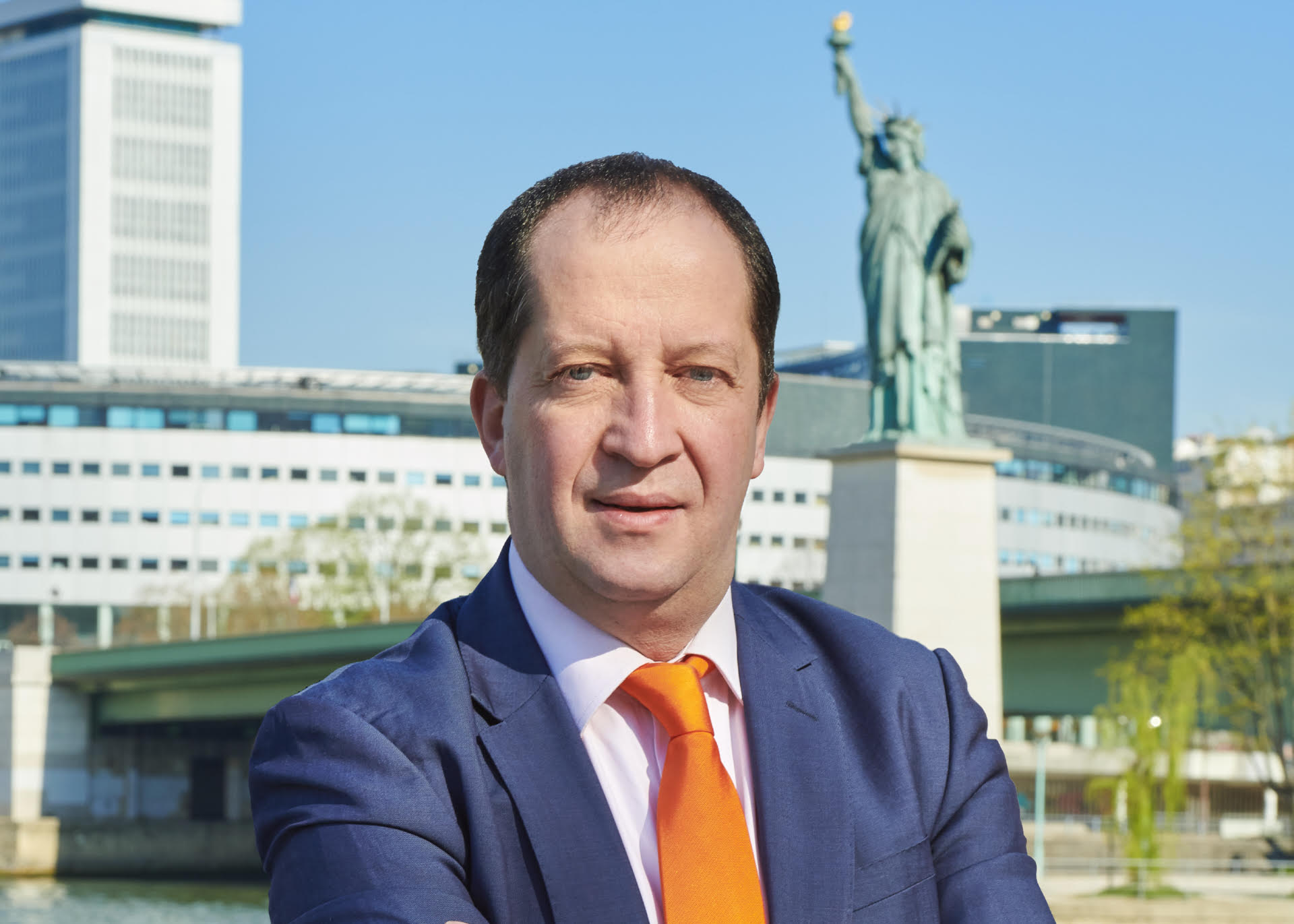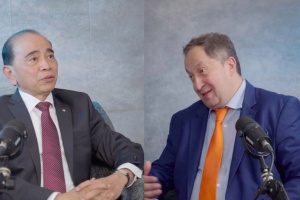




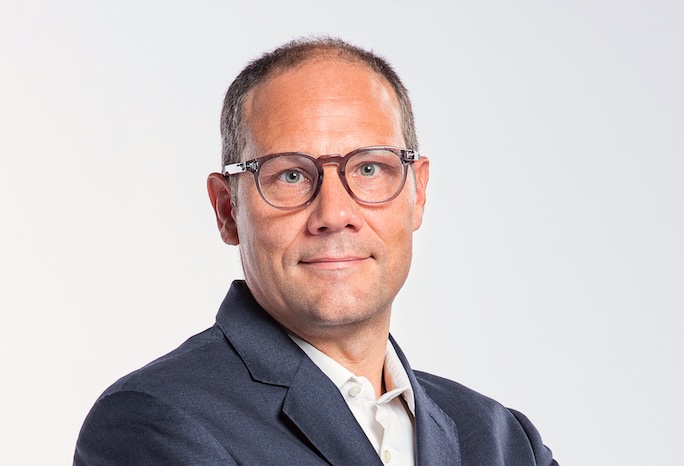
Opinion Internationale: Hello Antoine de Carbonnel. To begin with, could you introduce yourself?
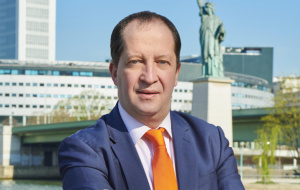
Antoine de Carbonnel: I’m French and I have been living in Indonesia for the past 18 years. Before arriving here, I worked in consulting — at McKinsey and Dean & Company — and later in investment funds. When I moved to Indonesia, I joined an Indonesian investment fund founded by the former head of JP Morgan Indonesia before transitioning into the tech sector. In 2011, I became CFO of a fintech company for five years. In 2016, the company was acquired by GoTo, Indonesia’s largest technology company. I stayed there until 2023 as Chief Commercial Officer. Since then, I have been working as an advisor, consultant and investor, notably as Indonesia Partner at Relecom & Partners.
Are there many French people living in Indonesia? What does the French community look like?
Not really. There are around 3,500 French nationals here. Most live in Jakarta or Bali. They are often entrepreneurs or expatriates working for major international groups, particularly French companies.
And what about French investors like yourself?
There is a small but solid core of French entrepreneurs who know the country well, genuinely appreciate it, and are developing businesses here.
Many French people still have a very tourist-oriented image of Indonesia. Yet the country has become a major emerging power…
Yes, Indonesia suffers from poor marketing. When people talk about the country, they immediately think of Bali, sometimes Java or Sumatra, but in reality they know very little about Indonesia itself. And yet, this is a country of nearly 300 million inhabitants, home to the world’s largest Muslim population, with immense natural resources and tremendous economic and cultural potential. Compared with Thailand or Malaysia, Indonesia remains underestimated despite its extraordinary strengths.
Which sectors today offer the greatest opportunities for French companies?
There are many opportunities. Historically, major American groups such as Freeport and Chevron, Japanese conglomerates like Mitsubishi and Marubeni, South Korean giants such as Samsung, Hyundai and Lotte, and to some extent the Dutch, were highly present. Over the past fifteen years, major Chinese groups have also gained considerable ground.
But Indonesia remains deeply non-aligned. In an increasingly bipolar world between Washington and Beijing — a dynamic Indonesia rejects, much like France — there is a real opportunity for Europe, and particularly for France.
Indonesians appreciate Europeans. They value our culture, our way of doing business, and our more respectful approach to human relations. They often believe that with Europeans, long-term dialogue and partnerships are possible.
Today, opportunities are immense in agriculture, agribusiness, agricultural processing, the dairy industry, defense, maritime infrastructure, drones, radar systems, industrial development, and of course tourism and culture.
President Prabowo Subianto himself is very Francophile. He lived in Switzerland, his son studied and worked in France, and his family has French ties. This cultural dimension matters enormously in Indonesia.
Tourism also seems underdeveloped…
Absolutely. France is the world’s leading tourist destination and possesses unique expertise in the field. Yet Indonesia is far more than Bali. The country comprises more than 17,000 islands and over 300 dialects and ethnic groups. There are hundreds of natural and cultural sites that remain largely undiscovered — and therefore full of untapped potential.
The opportunities are enormous in hospitality, gastronomy, luxury and the cultural industries.
What advice would you give to a French entrepreneur wishing to invest in Indonesia?
One must understand that Indonesia has its own cultural codes. Indonesians are extremely polite. They rarely say “no” directly. Many French businesspeople leave meetings convinced everything went wonderfully, whereas in reality their counterparts may have felt offended or unconvinced. Indonesians will never say this bluntly, but those companies simply will not receive a follow-up call.
Success therefore requires time, patience, and above all strong local partners. Regulations are complex and sometimes contradictory depending on the ministry involved. Understanding both the administrative and human functioning of the country is essential.
I often use this comparison: some markets are like an apricot. It is easy to get in, but eventually you hit a hard pit. Indonesia, by contrast, is more like a coconut. It is difficult to get into and requires perseverance, but once you have cracked the shell and built a solid relationship, the partnership lasts virtually forever. Indonesians are extremely loyal.
In your opinion, what are the main affinities between France and Indonesia?
There is genuine cultural and diplomatic closeness between the two countries. Indonesians admire French culture, luxury, the art of living, but also our non-aligned approach to international relations. France and Indonesia ultimately share the same desire to preserve their strategic independence in an increasingly polarized world.
Interview conducted by Michel Taube
|
|
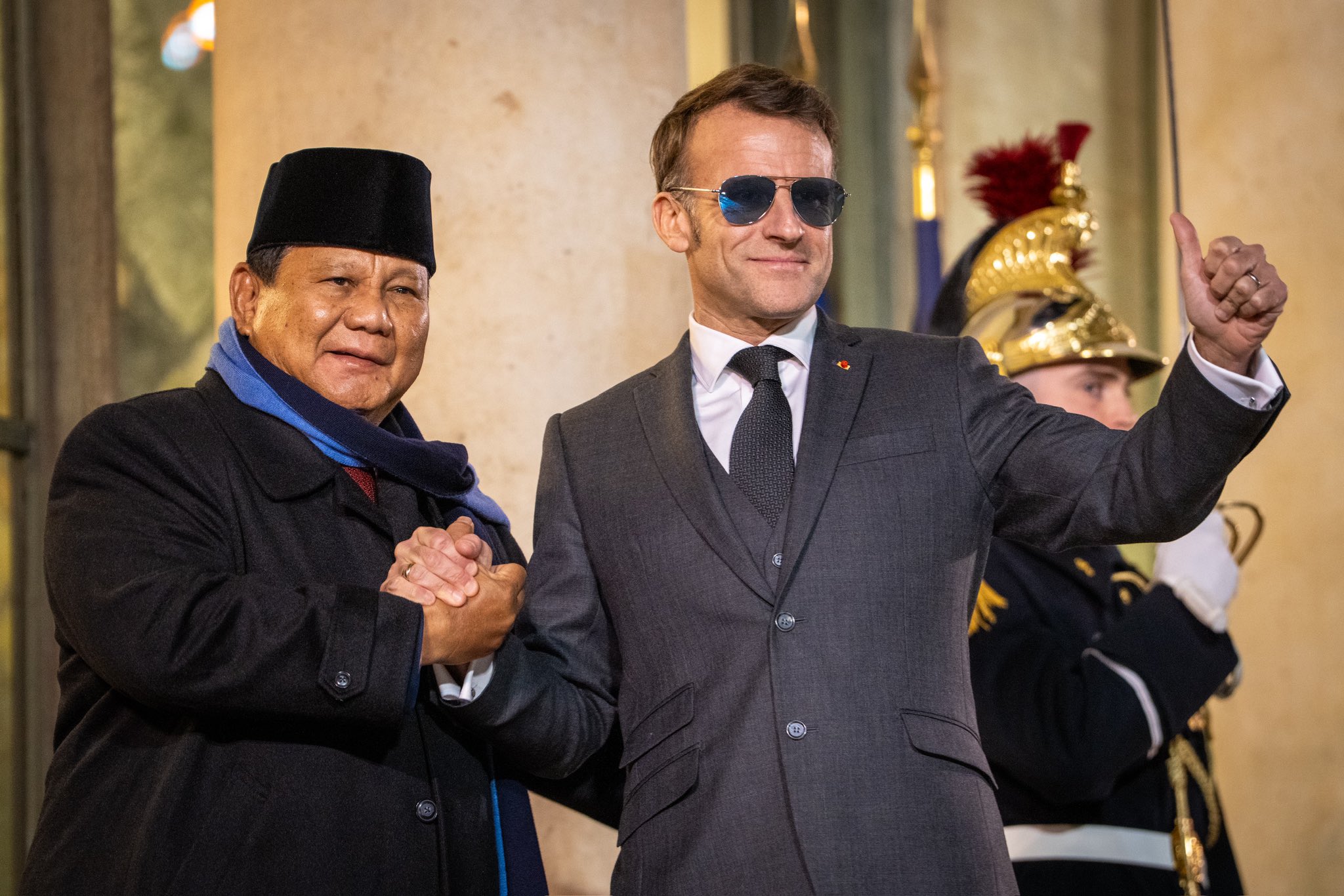
Issue Indonesia in Paris On the occasion of the state visit of President Prabowo Subianto to France on May 28, 2026, Opinion Internationale is publishing a special Indonesia edition. Interviews with French figures at the forefront of the economic rapprochement between French and Indonesian industries, analysis by geopolitical journalist Harold Hyman, and a portrait of one of Asia’s most Francophile leaders: this dossier is a call to French business leaders to invest in Southeast Asia’s largest market.
|
Contents:
Prabowo Subianto, France’s unexpected friend
Harold Hyman: the inevitable win-win relationship between Indonesia and France
This dossier inaugurates a new section on the front page of Opinion Internationale: Opinion Indonesia.
A dossier produced in partnership with Relecom & Partners, a strategic player in Franco-Indonesian relations.