



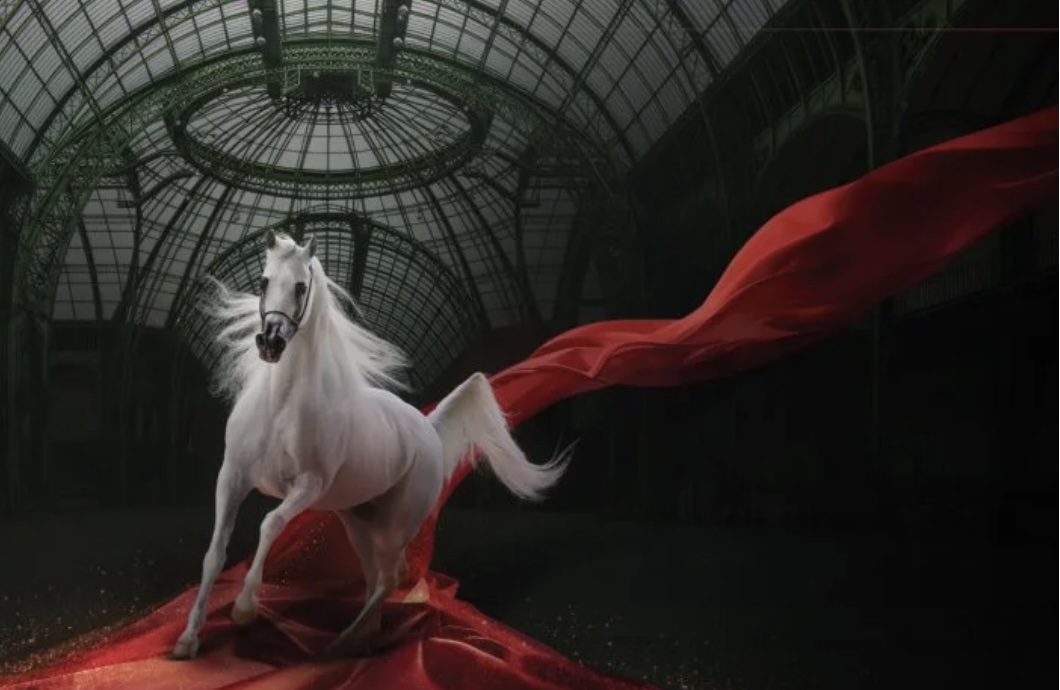
There are events that say everything about a country: its ability to welcome the world, to meet its gaze and to offer it a setting worthy of it. From 25 to 27 November 2026, the Arabian horse returns to Paris. Not to some anonymous exhibition hall on the outskirts of the city, nor to one of those interchangeable hangars where passions are parked like cars.
No: beneath the glass roof of the Grand Palais, a stone’s throw from the Champs-Élysées, in that great vessel of glass and steel that is the envy of the world. This is no mere logistical detail. It is a statement.
The World Arabian Horse Championship Supreme, the second edition of this new format launched in Doha last year and co-organised by CENECA, brings together the medallists of the Global Champions Arabians Tour, the circuit that has taken Arabian excellence from Doha to Muscat and from Aachen to the Americas. Three days, six categories, from yearling fillies to senior stallions, and a prize fund of $4.32 million. One of the largest purses in the discipline.
This is no village fair for knowledgeable enthusiasts: it is a world final, with its calendar, qualifying rounds, judges and criteria: breed type, head and neck, body, legs and movement. A discipline that scores beauty as others measure a jump or record a time.
And what beauty. Let us say it plainly, without evasion or false modesty: the purebred Arabian is probably the most beautiful animal in the world. Elegance and power embodied and entwined. That arched profile, the way it carries itself, that tail sweeping the air like a standard, that way of dancing rather than walking, that nobility that seems to come from so far back in time that it becomes an enigma.
The Arabian horse is not merely a show animal; it is an animal that embodies a civilisation: that of the Bedouins, the caravans and the poets. A horse reared in the family tent, one that shaped the language and imagination of an entire world, and for which the leading families of the Gulf, the United States and Europe now compete with bids running into the millions. A bloodline born in the desert, now a prestige asset coveted around the world.
For there is also an economy built around the Arabian horse. An entire industry makes its living from this breed: breeders and stud farms in Normandy, Poland, Qatar, Belgium and Saudi Arabia; trainers, in-hand handlers, vets, transport companies, luxury hospitality, fine jewellery, lifestyle businesses and the media.
A thousand prominent guests walk the aisles of an event like this each day, a gathering of decision-makers from the Middle East, the United States and Europe. Behind the horses lie business deals, partnerships, investments and doors opening. France holds a historic place in this world: it was here that the championship was created in 1980, here that it grew and set the standard. And it is here that it returns after its visit to Doha, like a great name coming home.
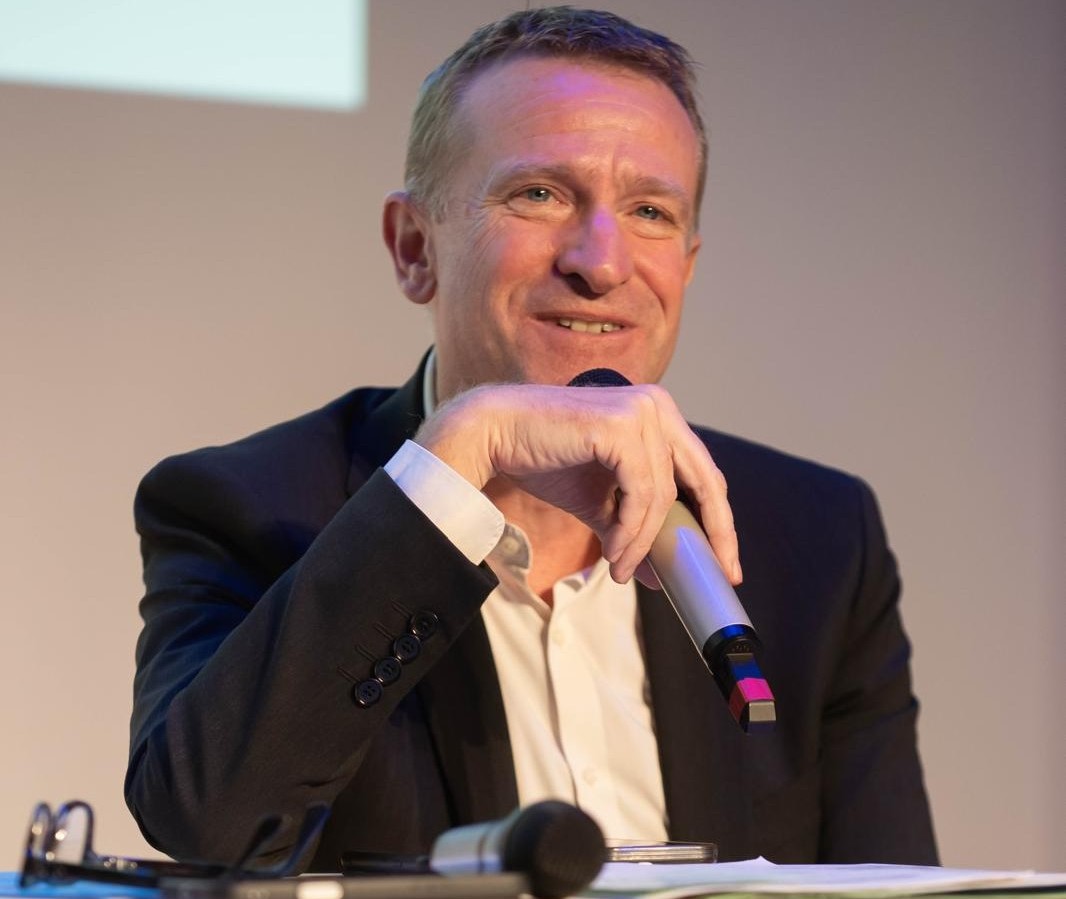
Let us acknowledge the commitment of CENECA and its leaders, including its president, Jérôme Despey, and its director, Arnaud Lemoine, who also head the Paris International Agricultural Show.
It is no accident that this event takes place in Paris. Qatar, Saudi Arabia, the Emirates and the leading names in global horse breeding do not choose Paris out of nostalgia. They choose it because Paris is the capital where art is traded for influence, where beauty becomes a diplomatic currency, where a country that respects itself is a country people want to visit. We are the country that invented salons, academies and great exhibitions.
We are the nation where a horse is taken as seriously as a painting. Continuing to attract this global event means becoming, for three days, the capital of the Arab world: not the world of some distant desert, but of beauty, heritage and the wealth that comes with them.
Finally, the World Arabian Horse Championship Supreme offers us a political lesson: France has no oil. It has prestige. It has an equine industry (the French Equestrian Federation is the country’s third-largest sports federation).
France also has the Grand Palais, that jewel of a setting newly restored to its former splendour, its vast, light-filled nave and its glass roof bringing the sky into Paris. To bring the Arabian horse, the prince of animals, into that space is to welcome the world.
As long as France hosts events like this, France will remain France. A country that does not disown itself, that does not apologise for its beauty or its grandeur. A country that dares, welcomes, shines and prospers. These three days also embody an act of resistance: a determination to preserve France’s greatness.
So go and see these horses. Let us take our children, treat ourselves to these three days, to this parade of equestrian haute couture beneath the largest glass roof in Europe. Let us look at what our country is capable of welcoming, and the beauty it knows how to honour.
The Arabian horse has a rendezvous in Paris? It is France that has a rendezvous with itself.
Michel Taube, founder of Opinion Internationale, and Radouan Kourak, president of the InterVision media group