



In FR :
Who governs Europe? The President of the European Commission, who increasingly fancies herself simply the President of Europe — or the heads of state and government (not forgetting the European Parliament, co-legislator) gathering in the European Council in Brussels on 15 and 16 October?
Among the dishes of the day at a Council under high tension, European leaders must discuss the Union’s budget for the years 2028–2034: the now-infamous Multiannual Financial Framework (MFF).
Yet on the new budgetary architecture and the financial envelopes proposed by Ms von der Leyen, a good many long-standing policies (regional policy and the common agricultural policy among them) are plainly threatened with renationalisation at member-state level, and with swingeing cuts. The Outermost Regions (ORs) stand on the front line of these attacks.
Running counter to the policy patiently built over decades — one that sought to ring-fence the Overseas territories within the EU framework — the President of the European Commission thus proposed, as early as July 2025, the abolition, under the next multiannual financial framework for 2028–2034, of the specific CAP enjoyed by the ORs: the famous POSEI.
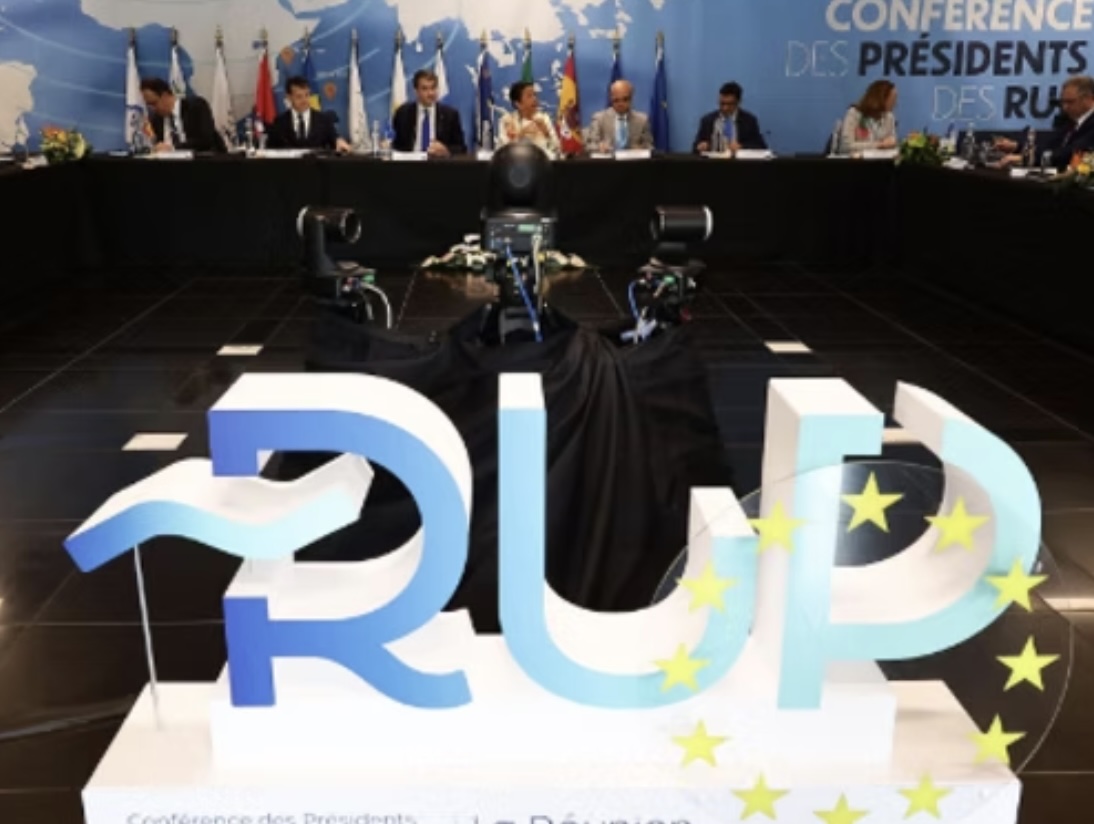
The POSEI is rather like a common agricultural policy for agriculture in the EU’s outermost regions — for France: Martinique, Guadeloupe, French Guiana, Réunion, Mayotte and Saint-Martin; the Azores and Madeira for Portugal; and the Canaries for Spain.
Ursula von der Leyen manifestly takes little interest in the outermost regions, preferring to sign slipshod free-trade agreements behind the backs of the founding countries and the ORs.
It was, moreover, Ms von der Leyen’s forced-through signing of the Mercosur–EU agreement that lit the fuse, since that agreement made no provision for sufficient protective clauses for the ORs — not by a long chalk.
The stakes are tectonic, and overseas professionals are up in arms: they demand that the POSEI be secured as a matter of priority, in keeping with the obligations flowing from Article 349 of the famous Treaty of Lisbon, which requires measures tailored to the realities of the ORs.
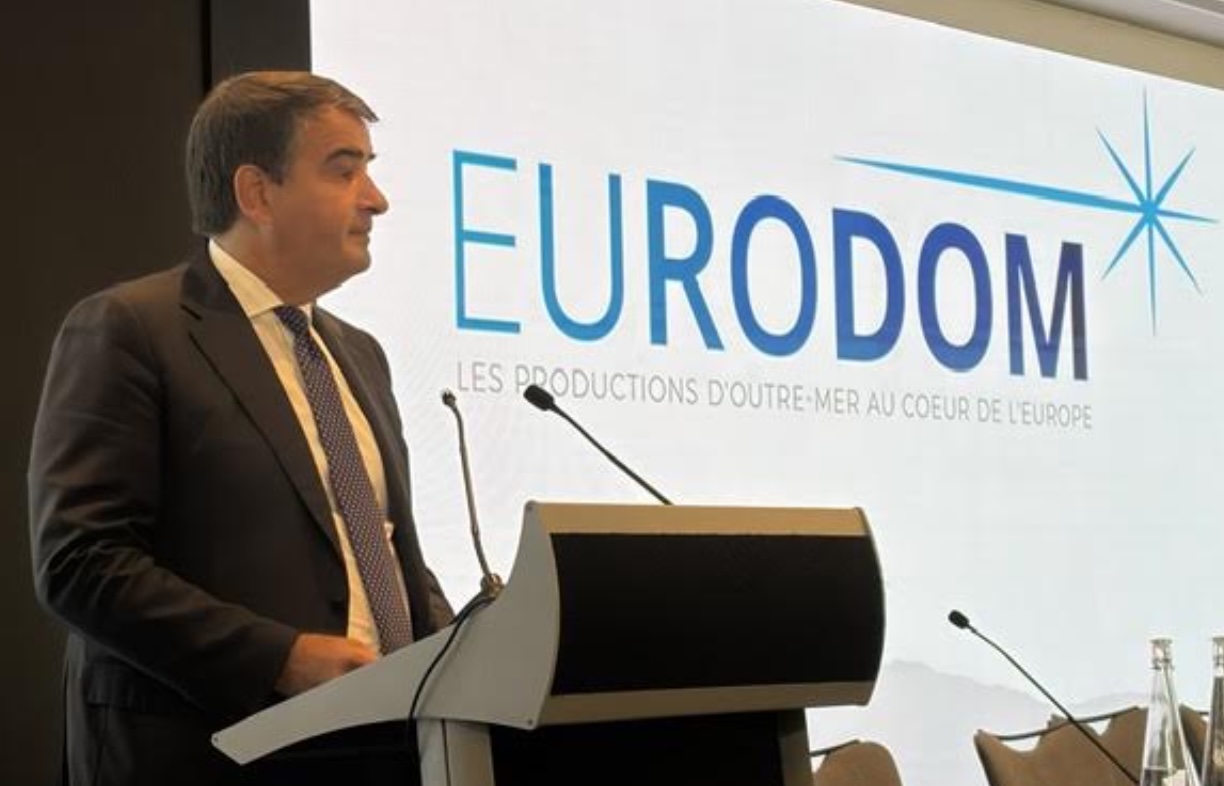
Raffaele FITTO, Executive Vice-Président of the European Commission.
Testy exchanges of correspondence (which we were able to obtain) have taken place in recent months between the European Commission and professionals from every overseas sector.
OR professionals restate this golden rule: « Securing the POSEI, as a common agricultural policy in the outermost regions, is indispensable to the cohesion and credibility of the European project across all its territories, including the most distant. »
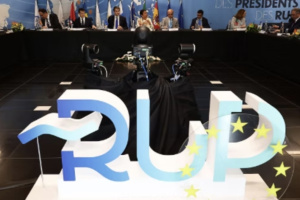
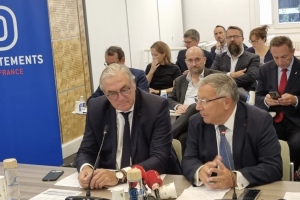
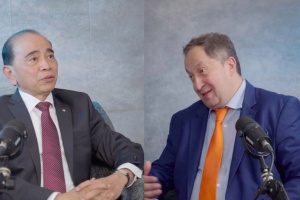
In Brussels, on 13 October 2026, at the close of Eurodom’s general assembly — which brings together most of the socio-professional players of the French overseas regions — Gérard Bally, co-founder, outgoing director-general and now special adviser to his successor Benoît Lombrière, had some very strong words, addressing the President of the European Commission directly:
« Ms von der Leyen, despite good initiatives such as the Omnibus OR, you cannot abolish the POSEI with a stroke of the pen, because it is not only one of the pillars of 40 years of overseas policies built by the EU, but also because it flows from an obligation under the treaties — and you are their guardian! »
The European Commission’s ungracious initiatives have already had one positive effect: a form of sacred union has formed behind the ORs. Not only the ORs’ economic representatives, but also the presidents of the outermost regions and MEPs from every political group in the Parliament, have all repeatedly stressed, for more than a year now, the need to maintain an autonomous POSEI — outside national and regional programmes, and with a reinforced budget.
The demands are clear:
- maintain a dedicated POSEI budget line beyond 2027;
- increase its envelope, unadjusted since 2011 (!), to account for inflation and rising costs;
- reject any dilution of the POSEI into the future single fund and into national plans.
Will the heads of state and government hear this sacred union in Brussels these next few days?
Will France — as it did, far too late, on Mercosur — but also Spain and Portugal, the only three EU member states with outermost territory, dare to oppose Ursula von der Leyen head-on?
The ORs — forgive me, our beloved Overseas territories — are well worth a trial of strength!
Michel Taube
Founder and director of Opinion Internationale and Info Outre-mer