



We must stand with Saudi Arabia. It must be said plainly, at a moment when its people and its infrastructure are being targeted. On 10 October, an attack on King Khalid International Airport in Riyadh killed at least twelve people and wounded 309, according to the Saudi authorities. Attributed to the Houthis, it follows other deadly strikes on the same airport. Flights were diverted, operations suspended, a commercial aircraft damaged in earlier attacks. Behind the regional balance of power lie human lives, first and foremost.
Let us not be fooled: this destabilisation threatens far more than the Saudi kingdom.
The Houthis are the Trojan horses of hostile powers: the scale of the equipment transfers, the technical assistance and the training all come from Iran’s Revolutionary Guards — notably the Quds Force — from Hamas, from Hezbollah and from Iraqi specialists. The Houthis retain objectives of their own, rooted in Yemeni history, but their military strength cannot be explained without that outside support. Missiles, drones, expertise: Tehran helped give a local movement a regional capacity for harm.
The economic and military equation
Attacks on oil installations, airports and maritime routes expose the world economy to fresh shocks. In the Red Sea and around the Bab el-Mandeb strait, the security of supply concerns Europe and Asia just as directly. Saudi Arabia must, moreover, preserve air-defence capabilities that the multiplication of strikes is straining. To let its civilian infrastructure become an ordinary target would be to accept that military blackmail gradually dictates trade between East and West.
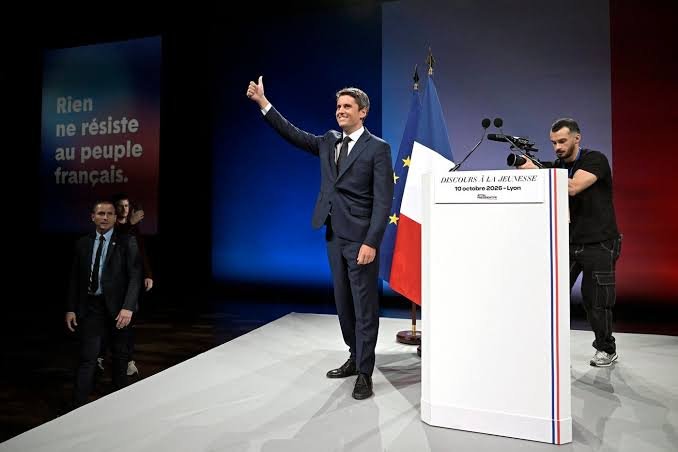
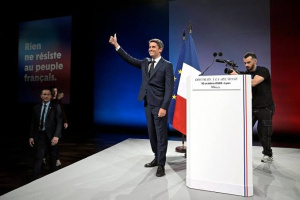
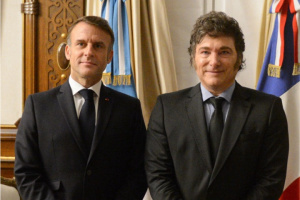
Emmanuel Macron — and we welcome the initiative — announced on 24 September, in a television interview on TF1 and France 2, the dispatch of French « military assets » to Saudi Arabia. Soldiers? Radars? Defence systems? We do not know the detail of these assets, but they are intended to protect the Yanbu energy site, Saudi Arabia’s main terminal for crude exports on the Red Sea, and a target of attacks by the Houthis of Yemen.
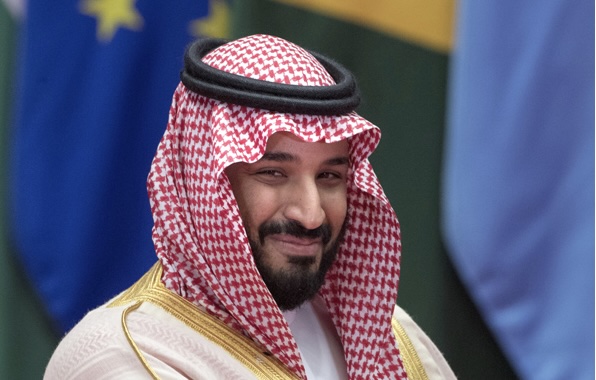
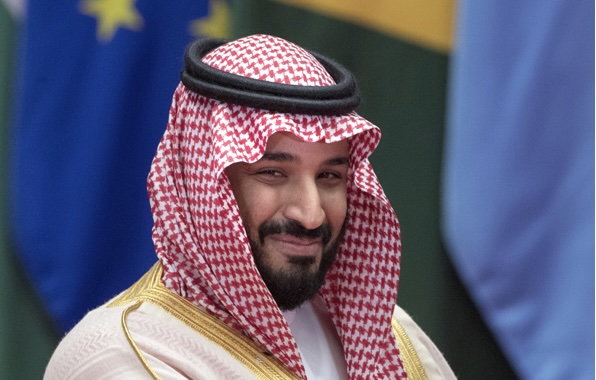
On 24 August 2026, the French head of state and Mohammed bin Salman had adopted a declaration providing for strengthened cooperation in armaments and military training.
7 October
7 October 2023 casts a tragic light on what is at stake in drawing closer to Riyadh.
Thwarting the rapprochement between Saudi Arabia and Israel was among the strategic objectives attributed to Hamas. The prospect of normalisation threatened the Islamist movement’s project, whose DNA holds the destruction of the State of Israel, from the river to the sea.
One of the principal reasons for Hamas’s launching of 7 October, backed by Hezbollah and the mullahs’ regime in Tehran, was therefore the imminence — or the prospect — of a peace agreement between Saudi Arabia and Israel.
A peace between Riyadh and Jerusalem would carry a significance far beyond the signing of a treaty. Saudi Arabia is home to Mecca and Medina, at the heart of Muslim revelation and history. These places are sacred to all Muslims, Sunni and Shia alike.
Saudi Arabia is to the Sunni Muslim world what Israel is to the Jews: the land of revelation, the promised land, a sacred land.
An openly acknowledged rapprochement between the kingdom of Islam’s two holy places and the State of Israel would send a considerable message of coexistence. It would of course still need to be given a durable foundation, including a credible political horizon for the Palestinians. A Palestinian state with no Hamas at its head: modern-minded Palestinians, Israel and Saudi Arabia should agree on that key objective.
A Saudi society in profound transformation, thanks to MBS
But standing with Saudi Arabia also means understanding what is changing there. The first economy of the Arab world, the kingdom has embarked, with Vision 2030 launched in 2016, on a diversification touching investment, employment, culture, tourism and the daily life of Saudis.
Under the impetus of Mohammed bin Salman, a society long locked within particularly rigid prohibitions is changing at a speed many Western observers still struggle to grasp.
The change began with a concrete retreat of religious coercive power in public space. In April 2016, the religious police were stripped of their powers of arrest, prosecution and identity checks. In a country where their interventions weighed on behaviour, on encounters and on dress, that decision altered everyday life.
Then the mandatory separation of restaurant entrances for unaccompanied men and for families was lifted in 2019. What we elsewhere consider banal represented, over there, a major shifting of the boundaries between the permitted and the forbidden.
The transformation of women’s condition is more decisive still. Since June 2018, Saudi women have been able to drive. We had, for that matter, launched the « Let them drive » campaign in 2013 with our friend Ari Vatanen, world rally champion and former Member of the European Parliament.
In 2019, women aged 21 and over gained the ability to apply for a passport and travel abroad without a male guardian’s authorisation. The reforms also allowed them to complete more civil-status procedures, including registering the birth of their children. Protections against workplace discrimination were introduced. An anti-harassment law had, as early as 2018, set another milestone. Male guardianship has not vanished from every domain, but the possibilities for movement, work and autonomy have expanded considerably.
These developments are producing measurable results. An IMF study published in 2026 finds that Saudi women’s participation in the labour market nearly doubled between 2017 and 2024. A woman who works, who has income of her own and who can move about gains a new capacity to decide her own life. The movement is accompanied by reforms of the business environment, the labour market and investment. The new investment legislation, which came into force in 2025, aims in particular to improve the treatment of foreign investors and the guarantees they enjoy. Behind the grand projects, then, there is also a change in economic rules.
Culture, too, has recovered its spaces. Commercial cinemas reopened in April 2018 after more than thirty-five years of prohibition. A separate Ministry of Culture was created the same year. Concerts, festivals, film production, libraries, artistic training: activities once marginalised or banned have become components of public policy. The Red Sea International Film Festival is part of that opening.
All these initiatives are changing the lives of a youth that wants to create, to go out, to work and to meet the world. And let us remember that of the 35 million inhabitants (nearly 45% of them foreign residents), under-30s account for 60% of Saudis and close to 45% of the total population.
That opening also runs through education. IMPACT-se’s studies of Saudi textbooks note a gradual reduction of extremist and discriminatory content, together with a greater place given to coexistence and critical thinking. Their analysis of curricula from 2024 to 2026 confirms the trend, while flagging improvements still needed. These changes must be taken seriously: the retreat of Islamism is played out also in what children are taught about other believers, about the world and about their own freedom of thought.
Tourism is another revolution. The opening of electronic tourist visas in 2019 widened access beyond religious and professional travel. At AlUla, development draws on landscapes, archaeology and heritage, notably the Nabataean site of Hegra. Cooperation with France and the creation of Villa Hegra illustrate that cultural ambition. The kingdom thus has the means to offer an experience that goes beyond shopping malls and luxury consumption: discovering civilisations, places, traditions. That promise will have to be judged by the real protection of heritage and by the place given to local inhabitants.
Jean-Yves Le Drian, former French minister of defence and foreign affairs, chairs the French Agency for the Development of AlUla (AFALULA).
Acknowledging these advances obliges us also to look at what resists. Social opening has not been accompanied by comparable political freedom. Violations of the rights of opponents and of defenders of freedoms remain documented. And some women activists who had called for the very reforms eventually adopted have themselves suffered repression. A solid relationship with Riyadh must make it possible to raise these facts frankly and to ask for further progress.
The death penalty
The death penalty remains, in this respect, a leaden shroud. Amnesty International recorded at least 356 executions in Saudi Arabia in 2025.
We are convinced that dialogue must be carried all the way to the kingdom’s highest political, judicial and theological authorities, to obtain a suspension of executions, the commutation of sentences and, ultimately, abolition. Since 2007, the United Nations General Assembly has called for a universal moratorium on executions with a view to abolishing capital punishment. That is a concrete path to propose and to defend. It will come only once the theological work has been done, as the Catholic Church did it under John Paul II.
In our contribution published for the World Day Against the Death Penalty on 10 October, we recalled the importance of a legal and theological debate within Islam itself. The protection of life, forgiveness, repentance, the rigorous conditions for applying penalties and the possibilities of alternative sanctions all feed an abolitionist argument. Let us mobilise theologians, jurists and public officials in Saudi Arabia — around these resources in particular. A Saudi evolution on this ground could carry considerable weight across the Muslim world.
Of MBS, who has managed to roll back so many prohibitions, we must ask that he open this front as well.
Riyadh or Mollahs’s Tehran — we must choose
Faced with the Iranian regime and the armed organisations it supports, a comprehensive strategy is indispensable. The American and Israeli military intervention, conducted hastily and in isolation and without consultation — even if it was legitimate in substance — failed because it was not coordinated. The security of Israel, of the Gulf monarchies and of commercial routes will be built together, or everyone will lose. What is needed is coordinated defence, pressure on arms networks, but also a diplomatic and political horizon.
Better still: the end of the mullahs’ regime and of the Revolutionary Guards in Tehran (which will come about in the end, because the Iranian people continue to be oppressed), peace between Israel and its neighbours, the retreat of Islamism within Islam, and the rapprochement of East and West all demand partners capable of acting on political, economic and religious realities.
All these challenges run through Riyadh.
Mohammed bin Salman’s Saudi Arabia is one of those essential partners. Its security concerns our interests; its transformation deserves our attention; its reforms must be encouraged and deepened. France and Europe are called to carry with it a demanding alliance, turned towards peace, prosperity and human dignity.
That is why we must stand with MBS’s Saudi Arabia.
Michel Taube