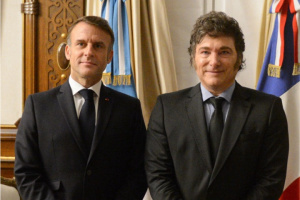




The event went largely unnoticed by the French media. Yet on 28 May, Indonesian President Prabowo Subianto paid a state visit to France, where he was received with full republican honours by President Emmanuel Macron.
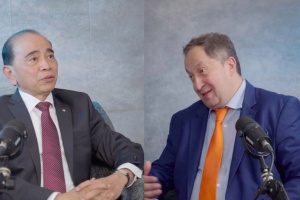
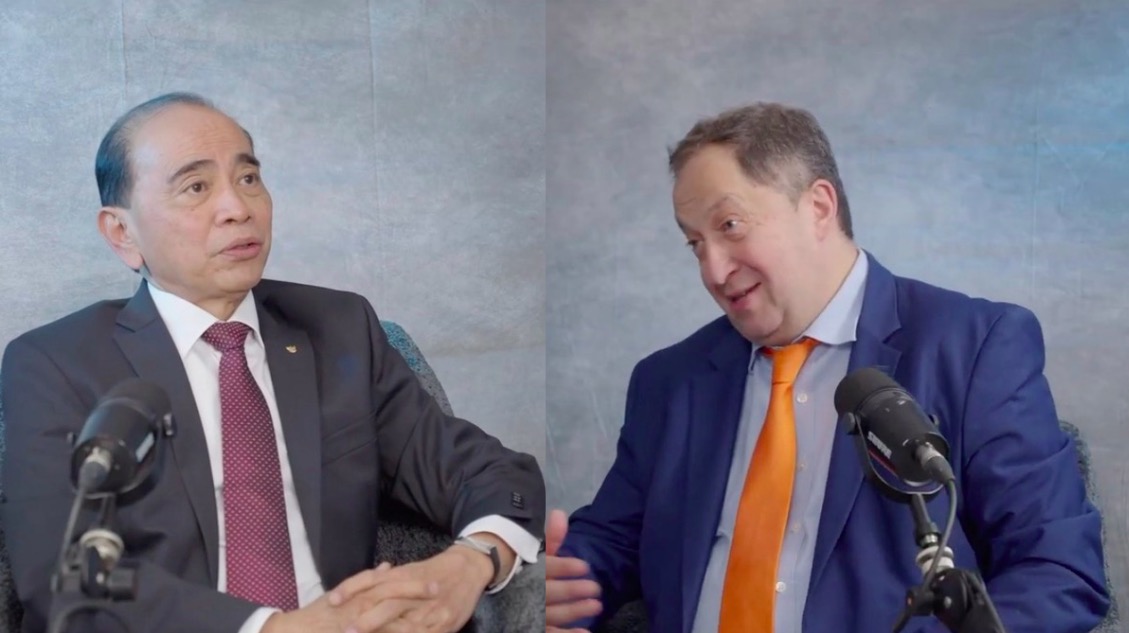
In this exclusive interview with Opinion Internationale and InterVision, Mohamad Oemar, Ambassador of the Republic of Indonesia to France, discusses the strategic ambitions of the Indonesia-France partnership, defence cooperation, the Danantara sovereign wealth fund, Eurosatory, Indonesia’s Indo-Pacific vision, and the growing affinity between the two nations.
Opinion Internationale: Your Excellency, thank you for accepting our invitation. You have been Indonesia’s Ambassador to France for several years now. Could you begin by telling our readers a little about yourself?
Mohamad Oemar: Thank you very much. It is a pleasure to be here, and I would also like to thank you for giving me this opportunity.
My name is Mohamad Oemar, and I have had the honour of serving as Ambassador of the Republic of Indonesia to France since December 2021. I am therefore now in my fifth year in Paris.
Before taking up this post, I served as Indonesia’s Ambassador to Italy, in Rome, from 2009 to 2011, some fifteen years ago.
You have now spent several years in France. What is your impression of the country and of the French people today?
I consider myself fortunate to be living in France and to have witnessed how much the country has evolved since my first visit.
I first came to France as a tourist in the 1990s. At that time, entering a shop or a café, it was quite uncommon to meet people who spoke English.
Today, the situation is completely different. Many French people now speak English, and one can clearly see—both in Paris and across the country—that France has become increasingly international, attracting people from every corner of the world in business, education and many other sectors of society.
France has become even more global than before. It is undeniably one of the world’s great capitals.
What has struck me most is the warm reception Indonesia enjoys as a partner. Whether in government-to-government relations, exchanges between our communities, education or business, Indonesia is welcomed with genuine openness and goodwill. That encourages us to deepen our cooperation with France even further.
How many Indonesians currently live in France?
There are approximately 5,300 Indonesian nationals living in France.
Who are they, for the most part?
They come from several different backgrounds.
Many are members of mixed French-Indonesian families. Others are students pursuing higher education. We also have professionals working across a wide range of sectors, as well as individuals participating in governmental, academic or institutional exchange programmes.
Indonesia is Southeast Asia’s largest economy and the world’s most populous Muslim-majority nation. Yet many French people still know relatively little about your country. Would you agree with that assessment?
Not entirely. I would rather say that this is a work in progress.
Geographically, Indonesia is far from France, and our historical ties are naturally different from those France has developed with certain European or African countries.
However, if we consider the intensity of our bilateral relationship—the frequency of high-level visits, government-to-government exchanges and people-to-people contacts—Indonesia already enjoys significant visibility in France, even though there is still much more we can accomplish.
Last year, Indonesia and France celebrated the 75th anniversary of diplomatic relations between our two countries.
President Emmanuel Macron visited Indonesia, travelling to both Jakarta and Borobudur, while President Prabowo Subianto came to France in July 2025 as Guest of Honour for the Bastille Day celebrations. Nearly 500 Indonesian soldiers marched alongside their French counterparts on the Champs-Élysées.
Today, more than 200 French companies operate in Indonesia, investing in roughly 3,000 projects across our archipelago. Conversely, at least 3,000 French citizens currently reside in Indonesia.
At our Embassy in Paris, we also offer BIPA, a free online Indonesian-language programme primarily intended for French speakers. Every year, around 200 French students enrol, and we have now been running this initiative for six consecutive years.
Tourism also reflects this growing interest. Last year alone, more than 350,000 French visitors travelled to Indonesia—almost 100,000 more than before the Covid pandemic.
Taken together, these figures demonstrate that awareness of Indonesia is steadily increasing in France, among citizens, students and the business community alike.
President Emmanuel Macron has pursued an ambitious Indo-Pacific strategy for nearly a decade, with Indonesia playing a central role. President Prabowo Subianto has also visited France on several occasions. What were the key outcomes of his recent State Visit to Paris on 28 May?
On 28 May, President Prabowo paid a State Visit to Paris, where he held extensive talks with President Emmanuel Macron, as well as with several French and Indonesian ministers.
The most significant outcome of the visit was the joint decision by both Heads of State to elevate our bilateral relationship beyond the existing Strategic Partnership by launching a Comprehensive Strategic Partnership. The practical modalities will be negotiated in the months ahead, but the political commitment has already been formally endorsed by both governments.
This new framework will be both broader in scope and deeper in substance than our current partnership.
One of its principal pillars is naturally defence cooperation. Yet our cooperation extends far beyond the procurement of military equipment. It also encompasses technology transfer, industrial cooperation, professional training, human capital development and joint efforts to strengthen Indonesia’s own defence industrial base.
A concrete example is our collaboration in the field of strategic radar systems, involving leading industrial partners in both Indonesia and France.
As you know, the two Scorpène-class submarines ordered by Indonesia will be built domestically by PT PAL, in Surabaya, East Java. This project perfectly illustrates our shared ambition to combine technological cooperation with industrial development.
We also agreed to deepen our economic partnership and encourage further investment.
New agreements were signed in energy, critical minerals, finance and several other strategic sectors, representing investments worth at least US$3.5 billion. These commitments come in addition to the agreements concluded during President Macron’s visit to Jakarta last year, which totalled approximately US$11 billion.
Our cooperation is also expanding in culture, education and academic mobility.
We expect to welcome more French teachers to Indonesia, while increasing the number of Indonesian students pursuing studies in France, whether through degree programmes or shorter academic exchanges.
More specifically, beginning this year, Indonesia will fund scholarships enabling an additional 150 Master’s students and 50 doctoral candidates each year to pursue their studies at French universities.
President Prabowo Subianto is widely regarded as a great admirer of France. Is he an exception among Indonesia’s leaders, or does a genuine francophile tradition exist in Indonesia?
Perhaps not on a large scale if one considers Indonesia’s entire population.
However, Indonesia is fortunate that, at this particular moment in its history, it is led by a President who knows France exceptionally well and who feels a profound attachment to this country.
During his most recent visit to Paris, President Prabowo shared with journalists that he first came to the French capital as a child with his parents.
His only son also spent more than ten years living in Paris, where he studied fashion design.
For President Prabowo, I believe France—and Paris in particular—represents something of a second home.
That attachment is also inspired by what France symbolizes worldwide: a country of culture, creativity, gastronomy and elegance.
How would you define Indonesia’s geopolitical doctrine in an increasingly fragmented world shaped by the war in Ukraine, the conflicts in the Middle East, strategic rivalry between China and the United States, and the growing influence of the Global South? What place does France occupy within this vision?
Indonesia’s foreign policy doctrine is known as bebas aktif, which literally means « independent and active. »
This principle is enshrined in our Constitution and has guided Indonesia’s diplomacy since the country’s independence.
« Independent » means that Indonesia does not align itself with any military alliance or geopolitical bloc.
« Active » means that we preserve our strategic autonomy while actively contributing to international peace, sustainable development, multilateral cooperation and constructive dialogue among nations.
Within this framework, we see a strong convergence with France’s long-standing tradition of strategic independence in foreign affairs.
Although France is a member of NATO, it has consistently maintained an independent diplomatic voice and strategic decision-making capacity.
Our two countries also share a number of fundamental principles: support for multilateralism, respect for state sovereignty, non-interference in internal affairs, and the conviction that dialogue and negotiation remain the best means of resolving international disputes.
These are values that Indonesia has consistently defended through its bilateral, regional and multilateral engagement.
Interview by Michel Taube