



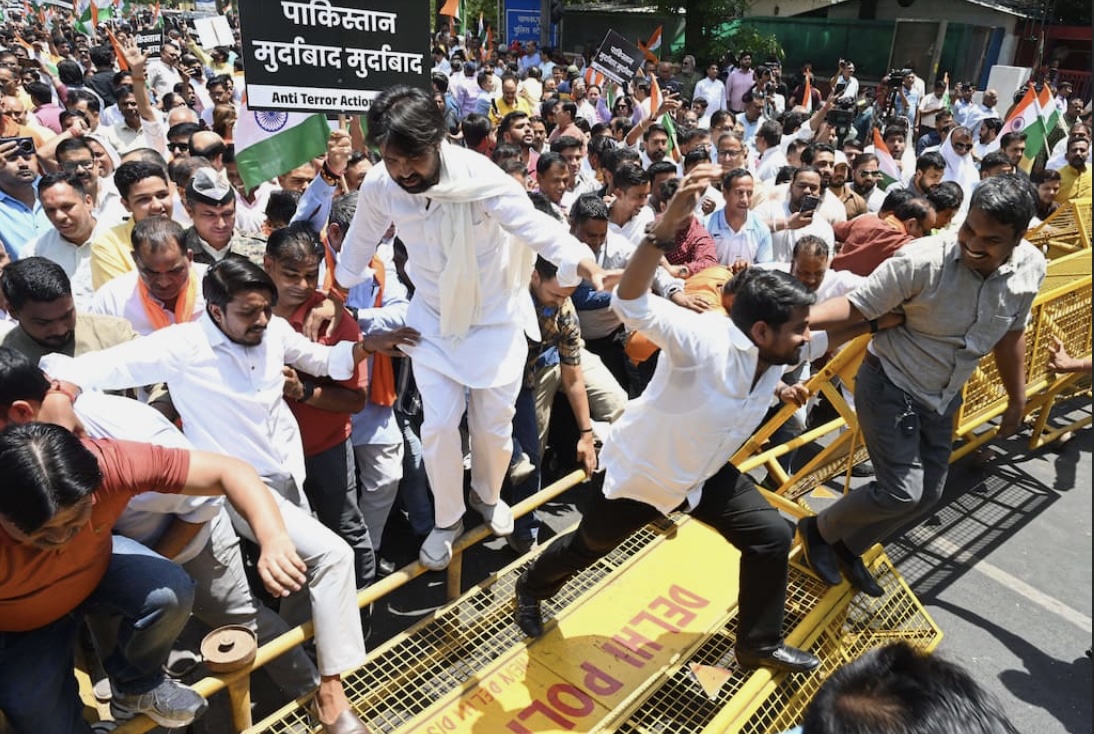
On April 22, 2025, a brutal attack in Pahalgam, in Jammu and Kashmir, India, killed 26 civilians—most of them tourists. The assault shocked the country, not only for its scale but for its symbolism: it targeted a place that had increasingly come to represent a fragile return to normalcy through tourism, elections, and economic activity.
The attack has been widely associated in security discourse with Pakistan-based militant networks, particularly Lashkar-e-Taiba (LeT) and Jaish-e-Mohammed (JeM). Attention has also focused on The Resistance Front (TRF), often portrayed as a proxy or offshoot linked to LeT, reflecting a pattern of rebranded or layered organizational structures. Pakistan has consistently rejected these assertions, reiterating its position that it does not support cross-border militancy. As in many such incidents, the competing narratives have hardened into a familiar cycle of accusation and denial, leaving little room for convergence.
The Attack and Its Aftermath
Details emerging after the incident indicated that the attackers deliberately targeted civilians. Reports suggested that victims were identified and segregated before being killed—a detail that underscores the sectarian and psychological dimension of the violence. Among the dead were not only Indian nationals but also foreign visitors, amplifying international attention surrounding the incident.
Following the attack, three individuals described as involved were later killed during an operation on the outskirts of Srinagar on July 22, 2025. Identification documents recovered from the deceased were reported to indicate links to Pakistan occupied Kashmir, reinforcing claims of cross-border involvement frequently cited in connection with the attack.
Timing and Strategic Messaging
The timing of the attack drew particular scrutiny. It came after a period marked by successful elections and a steady push to project stability and economic progress in the region. Tourism had rebounded, infrastructure projects were advancing, and the broader narrative emphasized normalization. Against this backdrop, the attack appeared designed not only to inflict casualties but also to disrupt that perception.
This aligns with a broader pattern often discussed in strategic circles: the use of non-state actors to create volatility at moments of political or economic consolidation. Pakistan denies such a doctrine, but the allegation continues to shape regional tensions with India.
Evolving Militant Ecosystems
Security analysts have increasingly pointed to changes in how militant groups operate. Financing methods, for example, are believed to be evolving, with concerns about encrypted communications, digital wallets, and cryptocurrencies being used to obscure funding flows. While such trends are discussed globally in counterterrorism circles, linking them conclusively to specific incidents like Pahalgam requires evidence that is rarely fully public.
There are also recurring claims about organizational adaptation. Reports have suggested that groups such as JeM have expanded recruitment strategies, including the creation of new wings, while LeT has diversified its training approaches, including specialized modules. Assertions about training camps, mobilization efforts, and inflammatory rhetoric continue to surface, though their details often rely on intelligence assessments rather than independently verifiable data.
A Broader Pattern—or a Contested Narrative?
Beyond South Asia, incidents involving individuals or networks allegedly connected to Pakistan-based groups are often cited to argue that the issue has global implications. Examples cited in public discourse include the conviction of a Pakistani national in a plot involving U.S. political figures, the guilty plea of a Pakistani-origin individual in an ISIS-inspired attack plot targeting a Jewish center in New York, and the arrest in South Korea of a Pakistani national alleged to have links to militant organizations.
Assessments by bodies such as the U.S. Congressional Research Service have noted that Pakistan has historically been a base of operations for several militant organizations. Global indices, including terrorism rankings, have also placed Pakistan among the most affected countries in terms of terrorism impact, reflecting both internal and external security challenges.
Aftermath and Response
In the wake of the attack, India launched a coordinated military response, signalling a willingness to escalate beyond diplomatic channels.
The risk, however, lies in escalation. Each such cycle tightens positions on both sides, reducing space for dialogue while increasing the possibility of miscalculation between two nuclear-armed neighbours.
Memory, Accountability, and Caution
The anniversary of the Pahalgam attack is a moment of mourning—but also of reflection. It raises urgent questions about accountability, the persistence of militant violence, and the narratives that shape regional politics.
There is little doubt that Pakistan-linked militant networks remain a serious concern in Kashmir and beyond. At the same time, the challenge they pose extends beyond South Asia, requiring sustained international attention and coordinated counterterrorism efforts.
Michel Taube