



There are diplomatic visits that belong merely to the realm of protocol. And then there are those that reveal something about the world taking shape before our eyes. Narendra Modi’s forthcoming visit to Nice this June unquestionably belongs to the latter category.
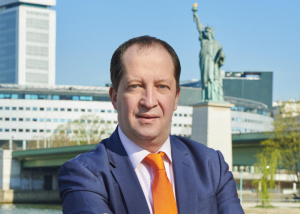
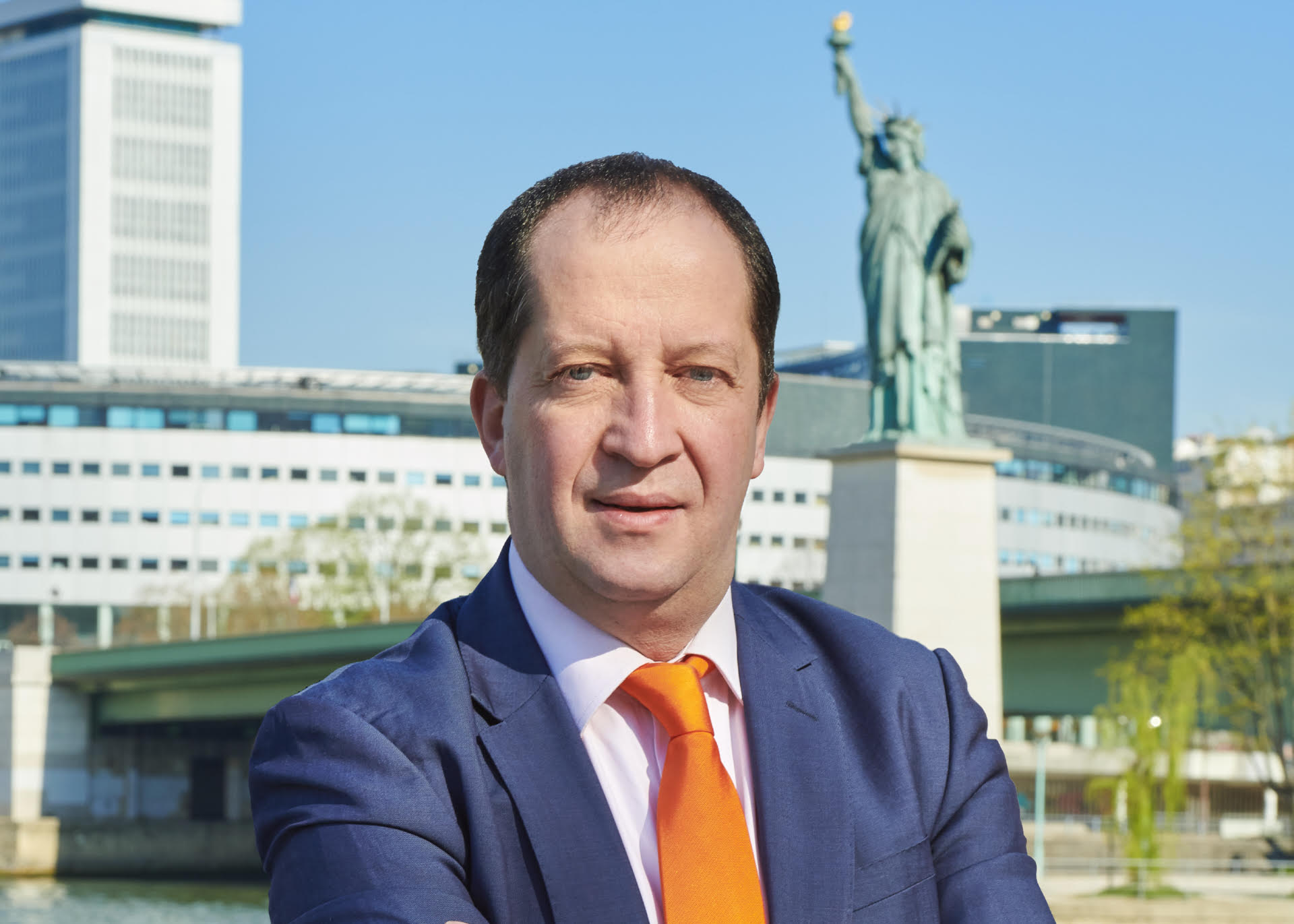
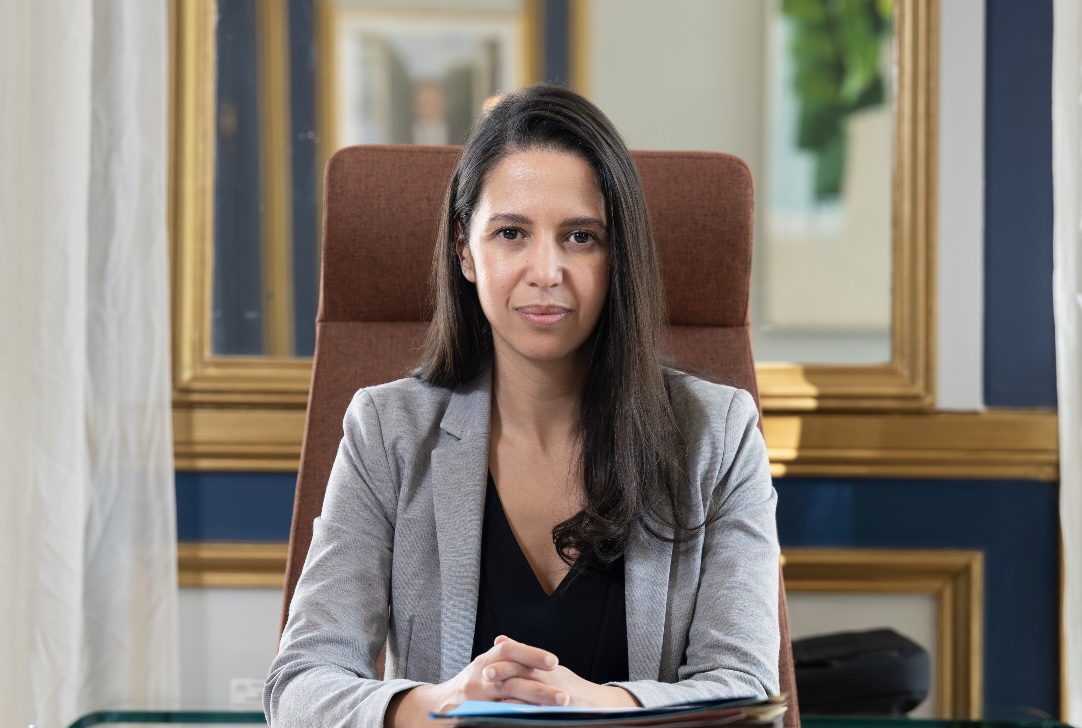
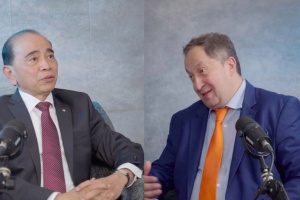
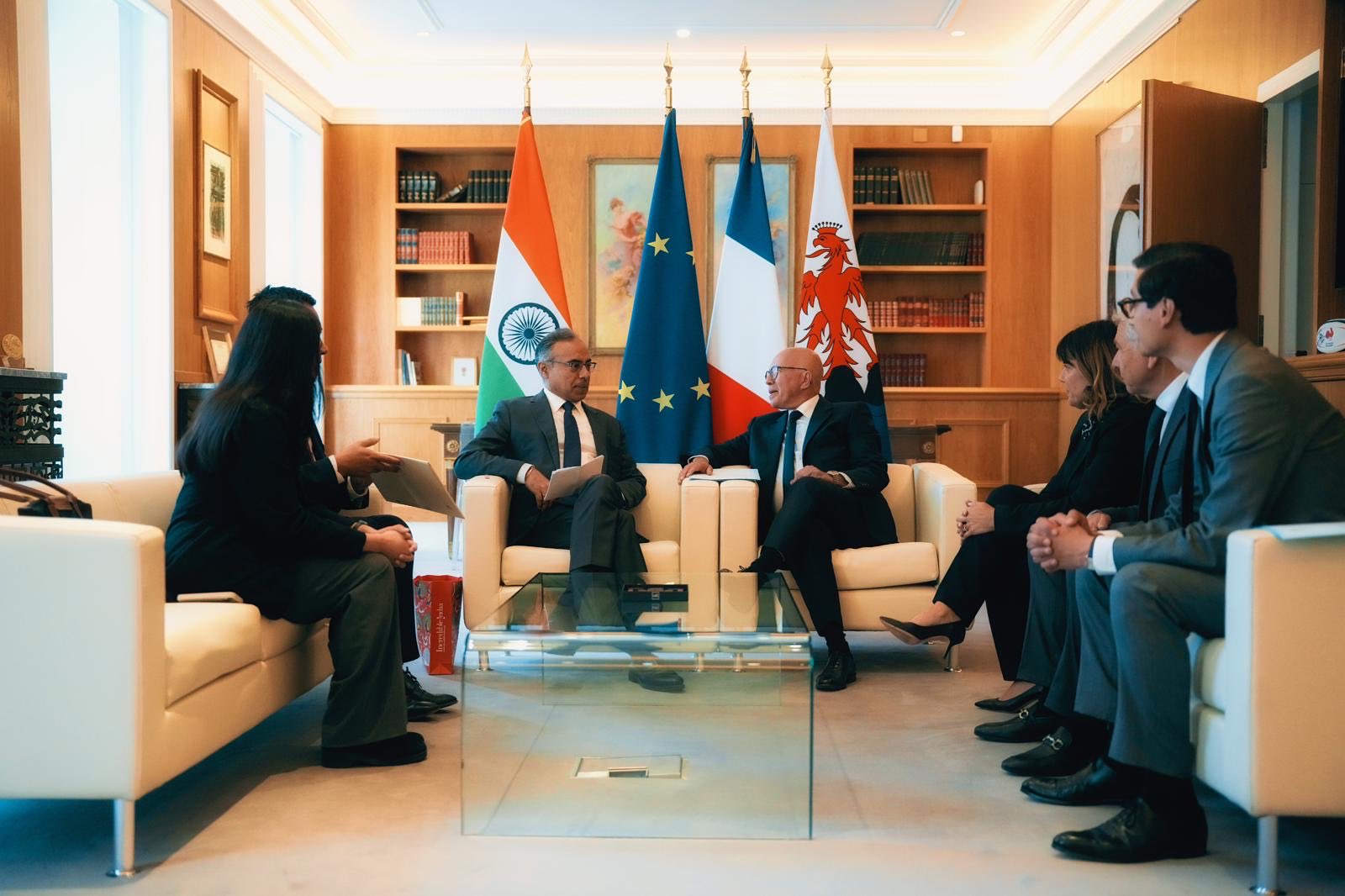
On May 5, Éric Ciotti welcomed India’s Ambassador to France, His Excellency Sanjeev Singla [our photograph], to finalize the last details of what promises to be a historic visit for the French Riviera.
That the Indian Prime Minister will be welcomed on the French Riviera by the newly elected Mayor of Nice and President of Nice Métropole, Éric Ciotti, is far more than another fashionable entry in France’s political calendar. It signals that, beyond partisan divisions, the higher interests of France must prevail.
According to our sources, Narendra Modi will take part in a major gathering dedicated to Indian innovation and technology. The event will showcase the extraordinary dynamism of India’s DeepTech and innovation ecosystem, fostering new connections with investors, researchers, and universities.
Yet behind the economic event lies a far broader ambition: to transform the Paris–Nice–New Delhi axis into one of the new centers of gravity of an emerging global order.
Education and environmental policy are also expected to play a central role. India’s Minister of Education has reportedly been deeply involved in preparing Mr. Modi’s visit to Nice. He is likely to take a close interest in the original and mobilizing strategy for environmental education that Nice’s new Deputy Mayor for the Environment and Vice-President of Nice Métropole, Jean-Marc Governatori, intends to deploy over the next six years.
Following Nice, the Indian Prime Minister will travel to the G7 summit in Évian, one of President Emmanuel Macron’s final major diplomatic gatherings before the pivotal horizon of 2027.
Nice, the Temporary Capital of the Indo-Pacific World
The choice of Nice is anything but accidental. The Mediterranean is once again becoming a major strategic arena, at the crossroads of geopolitical tensions, trade routes, energy transition, and global maritime challenges.
France understood this long ago. India has as well.
The United Nations Ocean Conference (UNOC3), held in Nice in 2025, had already demonstrated how central international cooperation on maritime governance and ocean resources has become. India distinguished itself there through a series of initiatives on maritime governance, the blue economy, and the protection of the oceans.
Now, with Narendra Modi’s arrival, Nice becomes something more than a tourist destination or a postcard setting. For the duration of a summit, it becomes a stage upon which global diplomacy is performed.
Éric Ciotti and the International Challenge
For Éric Ciotti, recently elected Mayor of Nice, this visit also represents a major political and diplomatic test.
The French right, so often confined within domestic debates, is here confronted with another dimension altogether: the global competition for investment, innovation, and influence.
To receive Narendra Modi is not merely to welcome a foreign head of government. It is to receive one of the most powerful men on Earth.
It is also an acknowledgment that French territories are capable of thinking globally when they aspire to remain influential.
Éric Ciotti may well dream of a national destiny should the nationalist right come to power in France next year. France would then require strong international relays, and this encounter in Nice could forge strategic bridges in the event of a historic political shift.
Behind the official photographs, the handshakes, and the predictable speeches, Narendra Modi’s visit to Nice tells a far deeper story.
What if one of the great axes of the twenty-first century were now being forged between Paris, New Delhi… and Nice?
Michel Taube