



There was a time when the Indian Ocean appeared peripheral to the world’s major geopolitical equations. That time is over.
From the Gulf to East Africa, from energy corridors to submarine cables, from maritime tensions to the climate transition, the Indian Ocean has become one of the central theatres of the 21st century. And while India fully intends to play a leading role there, France, too, is determined to assert its place.
For nearly a decade now, Emmanuel Macron — and no one could accuse the author of these lines of excessive Macronism — has genuinely advanced a French Indo-Pacific vision. Not always supported by the established institutions of our country, the French president has nonetheless acted as a strategic pioneer, a stance from which France will benefit long after his mandate ends.
France is often — wrongly — perceived as an external actor in the region. Yet it is a resident power in the Indian Ocean through Réunion, Mayotte, and its overseas territories. It also takes part in the Indian Ocean Commission, which brings together the island states off the southeastern coast of Africa.
India, Indonesia, Japan… the French president has demonstrated a form of visionary voluntarism. And the Franco-Indian partnership operates in remarkable harmony.
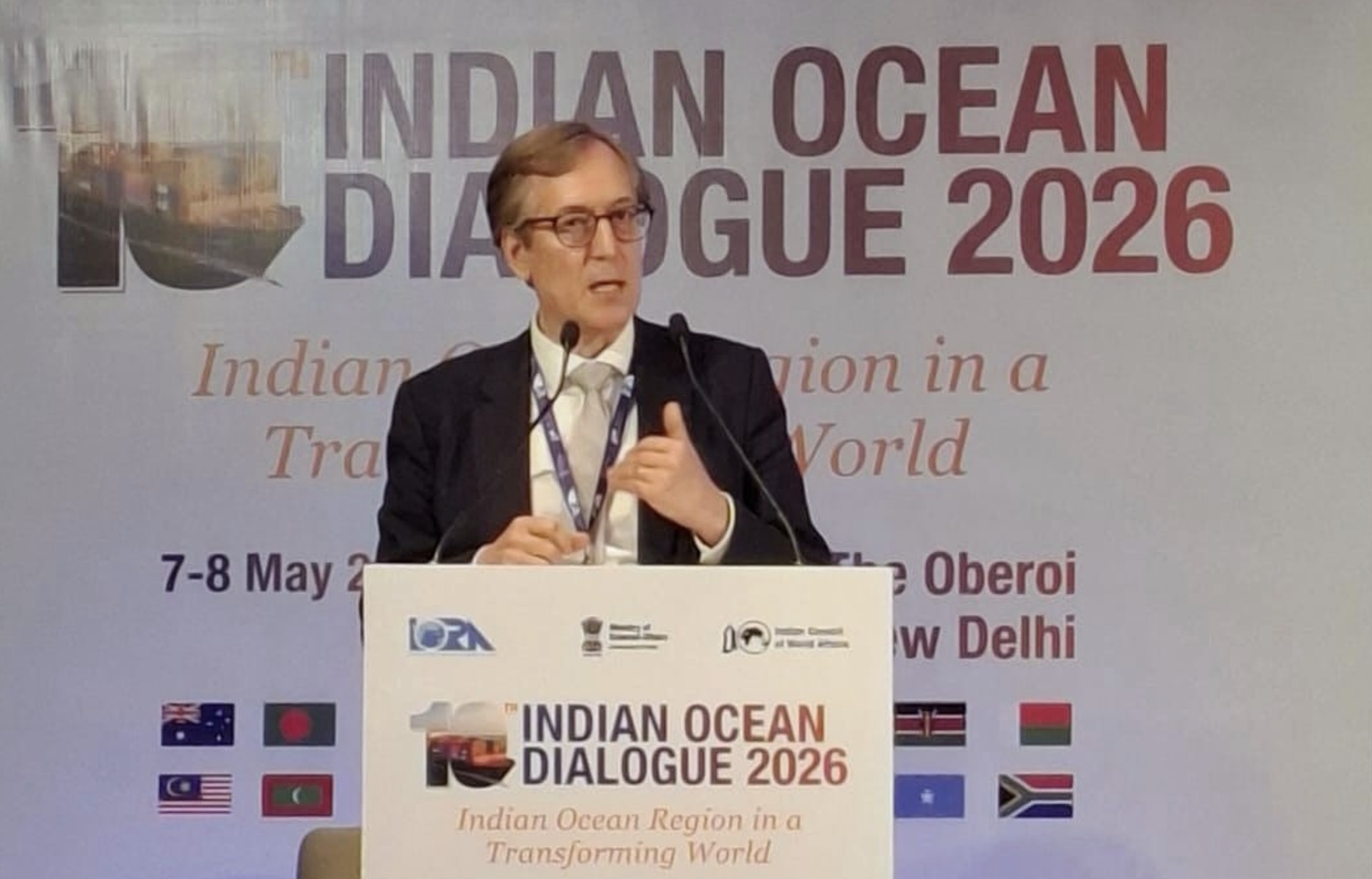
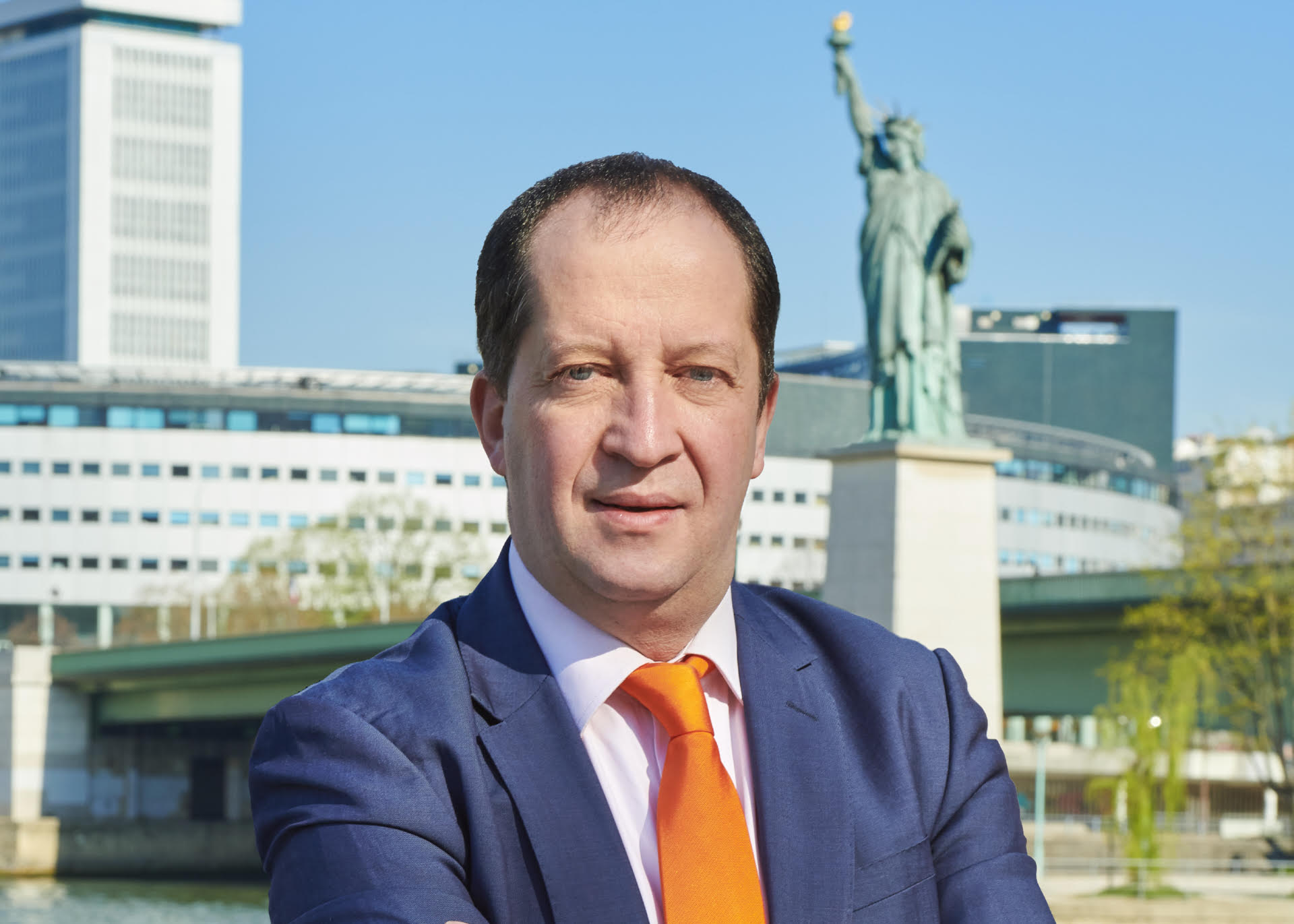
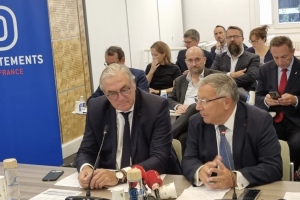
Jean-Claude Brunet Océan Indien Sommet IOD 10 de l’IORA.
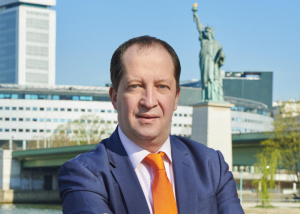
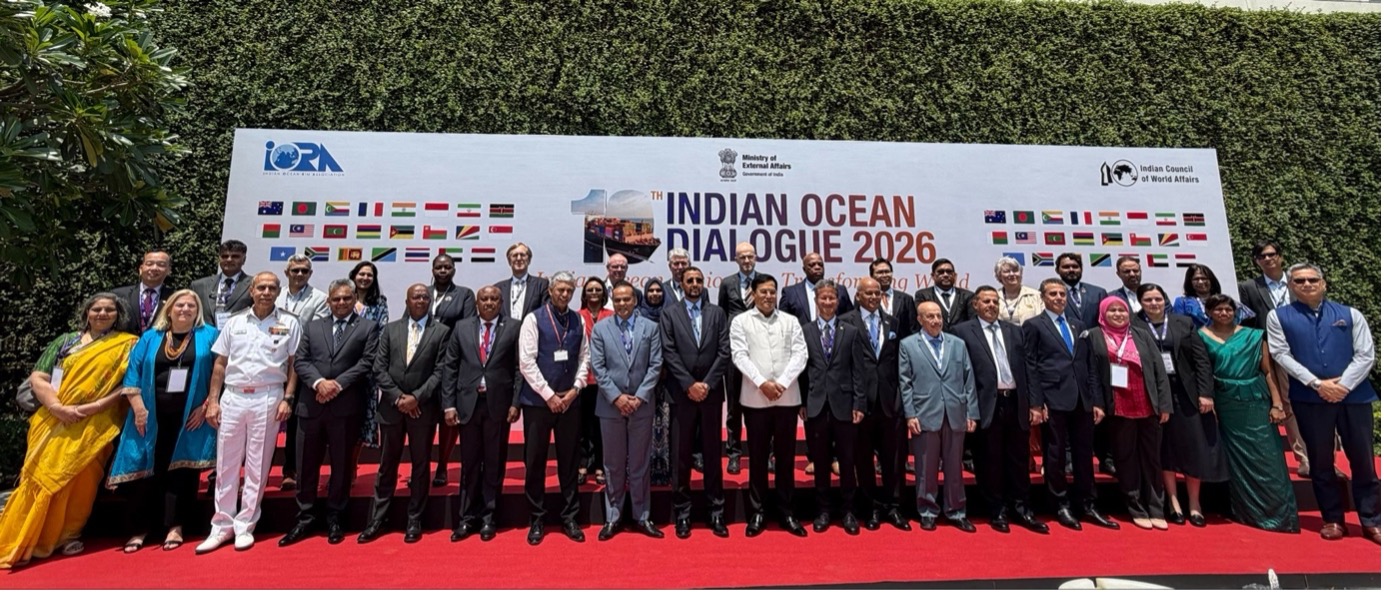
Thus, by hosting in New Delhi on May 7 and 8, 2026, the 10th edition of the Indian Ocean Dialogue (IOD-10) under the theme “Indian Ocean Region in a Transforming World,” India ensured France’s presence through Jean-Claude Brunet, the French Special Envoy for Regional Cooperation in the Indian Ocean [our photo], whose intervention was widely praised. In New Delhi, the representative of the French president reaffirmed Paris’s commitment to maritime security, climate-risk management, the blue economy, and regional stability.
Organized by the Indian Ministry of External Affairs in cooperation with the Indian Council of World Affairs (ICWA) and the Secretariat of the Indian Ocean Rim Association (IORA), the Dialogue brought together ministers, diplomats, strategic experts, and decision-makers from across the region.
India Asserts Its MAHASAGAR Doctrine
This year’s Dialogue carried particular significance: India now holds the presidency of the IORA — the Indian Ocean Rim Association — for the 2025–2027 period, an organization bringing together 23 Indian Ocean littoral states, including France.
The opening addresses by Sarbananda Sonowal, India’s Minister of Ports, Shipping and Waterways; Dhananjay Ramful, Mauritian Minister of Commerce and Regional Integration; and Yemeni minister Waleed Mohammed Al Qadimi all converged on the same message: no single state will be able to stabilize this immense maritime space alone.
Through its MAHASAGAR vision (Mutual and Holistic Advancement for Security and Growth Across Regions), the Indian government seeks to articulate maritime security, economic development, regional cooperation, and strategic sovereignty within one coherent framework.
Beyond the technical discussions on maritime security, the blue economy, investment, and climate risks, one reality is becoming increasingly clear: the battle for global influence will now be fought across the oceans.
Piracy, geopolitical tensions, climate disasters, food security, supply chains, maritime cybersecurity — the challenges are now deeply interconnected.
And nowhere more so than in the Indian Ocean.
Nearly 80% of the world’s hydrocarbon trade transits through the Indian Ocean. The new strategic rivalries between global powers are already unfolding there. We see it in the war involving Iran and the hostage-taking of the Strait of Hormuz. China is extending both its infrastructure network and its naval ambitions. The United States continues to maintain its military vigilance.
Perhaps the true lesson of this 10th Indian Ocean Dialogue lies precisely here: the seas are no longer merely commercial spaces. They are once again becoming political spaces.
Whoever controls maritime flows will tomorrow control part of global growth, energy resources, digital data, and strategic balances.
India understands this.
France does as well.
And both nations share the same vision: that of a multipolar, stable, and cooperative space.
In a fractured and unstable world, shaken by technological and military rivalries, the Indian Ocean could either become a zone of permanent confrontation or an unprecedented laboratory for cooperation between democracies, regional powers, and emerging nations.
New Delhi and Paris have chosen to believe in the latter possibility. And judging by the mobilization of IORA member states, this ambition no longer appears to be mere diplomatic rhetoric.
Michel Taube