



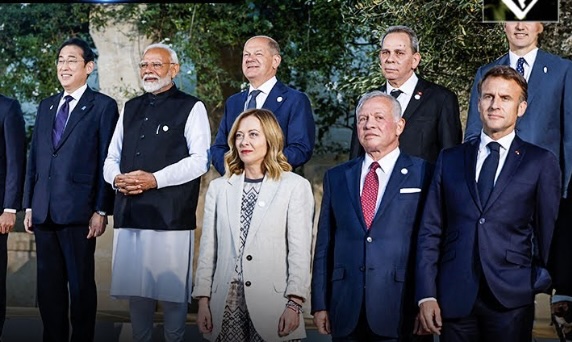
Global diplomacy often evolves faster than the institutions designed to organize it. The next G7 summit, which France will host in Évian-les-Bains from June 15 to 17, 2026, offers yet another illustration of this reality. By inviting Indian Prime Minister Narendra Modi, Emmanuel Macron is doing more than welcoming a strategic partner. He is acknowledging a fact that has become impossible to ignore: the major balances of the twenty-first century can no longer be conceived without India.
This diplomatic moment comes at a particularly tense time in international affairs. The war in Ukraine continues to reshape global power dynamics. Tensions between China and the United States remain high. Conflicts across the Middle East are destabilizing entire regions. Technological rivalries surrounding artificial intelligence, semiconductors, and critical resources are intensifying. In this uncertain environment, India is increasingly emerging as one of the central pillars of global equilibrium.
For India is no longer merely an emerging power. It is now an established one. With more than 1.4 billion inhabitants, it has become the world’s most populous nation. Its economy ranks among the most dynamic on the planet. Its technological sector continues to expand. Its diplomatic influence reaches far beyond Asia. Its military weight is considerable. Above all, India possesses a rare asset in today’s world: it speaks to everyone.
New Delhi maintains a strategic dialogue with Washington. It is developing ambitious partnerships with Europe. It preserves historic ties with Moscow. It engages with the Gulf monarchies. It participates in the BRICS while simultaneously strengthening cooperation with Western democracies. At a time when many countries are being pressured to choose sides, India insists on preserving its freedom of maneuver.
It is precisely this independence that fascinates as much as it unsettles.
For several years, Western capitals have sought to deepen their ties with New Delhi. The reasons are numerous. India represents a colossal market. It serves as a potential counterweight to Chinese power. It is viewed as a natural partner in securing global supply chains. It is also destined to play a major role in addressing climate, energy, and technological challenges.
Yet at the same time, Western leaders are discovering an India that refuses to behave like a compliant ally. On the war in Ukraine, Narendra Modi has declined to break with Moscow. Within the BRICS framework, India continues to invest in an organization often perceived as a competitor to the Western-led international architecture. In global trade, it prioritizes Indian interests above all else. In short, India methodically practices what great powers have always practiced: the defense of their national interests.
In Évian, this paradox will be impossible to ignore. G7 leaders will seek to strengthen cooperation with New Delhi while knowing full well that India is unlikely ever to join any Western bloc. It does not wish to become a pawn in the Sino-American rivalry. It seeks instead to be a center of gravity in its own right.
Emmanuel Macron appears to have fully grasped this transformation. Over recent years, the Franco-Indian relationship has deepened considerably. Defense cooperation, industrial partnerships, energy, space, artificial intelligence, and infrastructure are among the many areas where convergence is growing. France is one of the few European countries to have developed a relationship with India based on mutual respect rather than on a logic of tutelage or dependence.
This closeness also aligns with France’s Indo-Pacific strategy. Thanks to its overseas territories, France is itself a power in both the Indian and Pacific Oceans. It understands that the world’s economic and geopolitical future is increasingly being shaped in this region. From this perspective, India emerges as a natural partner in preserving regional balances and defending an open vision of international exchange.
In reality, Narendra Modi’s presence in Évian raises a broader question about the future of the G7 itself. Created at a time when Western economies overwhelmingly dominated the planet, the club of industrialized democracies no longer constitutes the center of the world on its own. Major global decisions now require the participation of actors such as India, but also Brazil, Indonesia, South Africa, and Saudi Arabia.
The G7 remains influential.
But it is no longer sufficient.
In many respects, the Évian summit will resemble a streamlined G20 far more than a traditional G7. The defining challenges of this century demand a form of governance that is more open, more inclusive, and more realistic. International balances are no longer shaped exclusively along the shores of the Atlantic.
The invitation extended to Narendra Modi is therefore much more than a diplomatic gesture. It formally acknowledges the rise of a new world—one in which emerging powers no longer ask for a seat at the table of the great nations; they take their place there.
The twenty-first century will be multipolar. Not because of ideological preference, but because demographic, economic, and geopolitical realities make it inevitable.
The remaining question is whether the institutions inherited from the previous century will prove capable of adapting to this new landscape. Failing that, they risk being gradually bypassed by those who are already shaping the world of tomorrow.
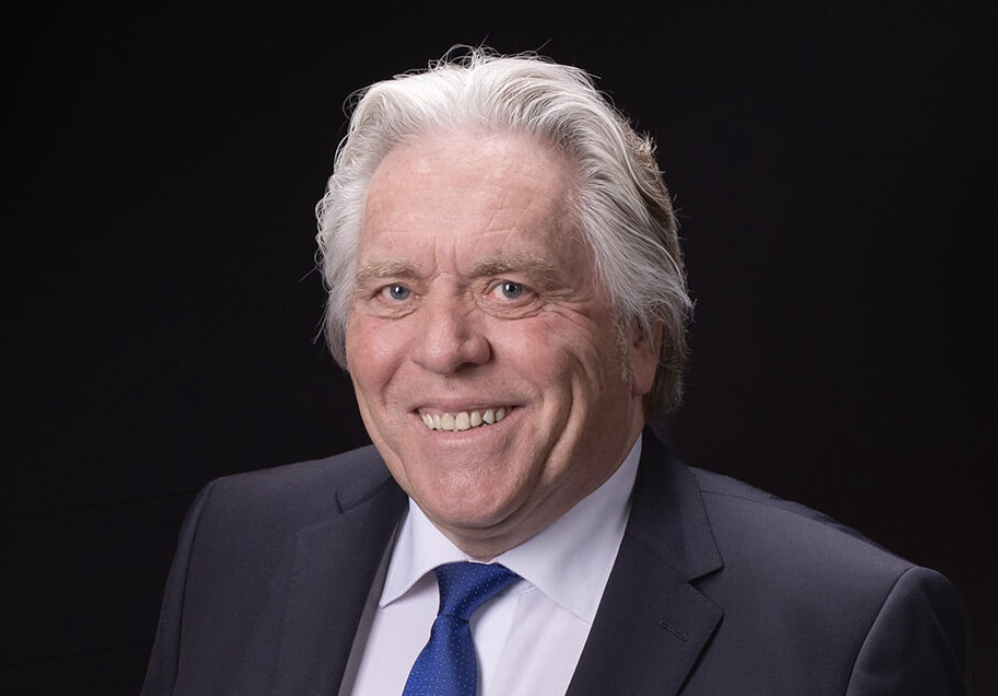
Michel Taube