



In international politics, words matter. Sometimes, a single sentence reveals a deeper geopolitical transformation.
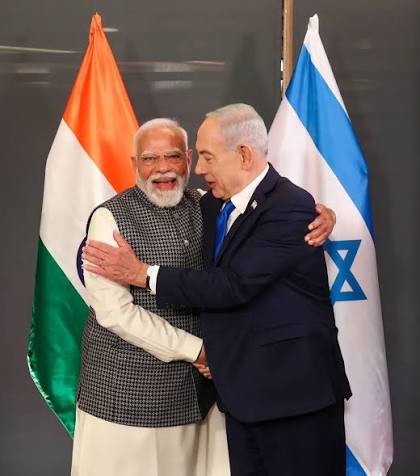
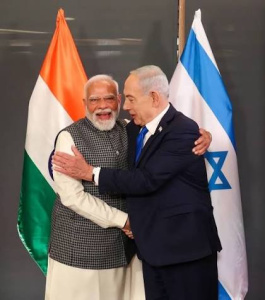
In a recent interview with Fox News, Israeli Prime Minister Benjamin Netanyahu responded to US Vice President JD Vance’s claim that the United States was Israel’s only truly important ally by offering a qualification. “We have a few other friends, like a little country called India. It has 1.4 billion people, and we enjoy considerable support there,” he said, adding that he regularly saw numerous expressions of support for Israel coming from India on social media.
One cannot fail to appreciate the complimentary use of the term “little country” to describe the world’s most populous nation.
For several decades, Israel’s diplomatic architecture rested primarily on its strategic partnership with the United States. This alliance remains unrivalled in military, political and technological terms. Netanyahu himself reiterated that President Donald Trump remains “the greatest friend” Israel has ever had in the White House.
However, tensions have emerged in recent months, and Israel is seeking to strengthen its autonomy, even from its principal ally. Building other alliances is part of this strategy.
The decision to mention India publicly reveals a significant development: Israel increasingly regards New Delhi as one of its most valuable global partners.
This development did not happen overnight.
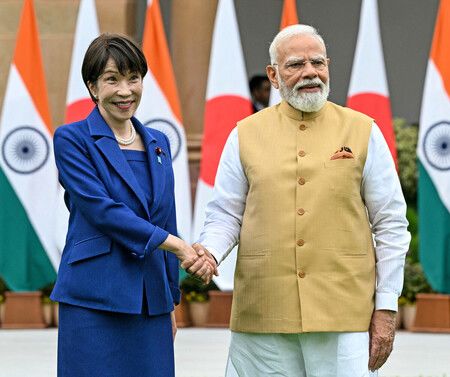
Since Prime Minister Narendra Modi came to power in 2014, relations between India and Israel have expanded considerably. Defence cooperation has deepened, intelligence sharing has intensified, and collaboration now extends to agriculture, water management, cybersecurity, artificial intelligence and innovation. India has become one of Israel’s largest defence customers, while Israeli companies increasingly view India as a strategic market and a long-term technology partner.
What makes this relationship particularly remarkable is that it has developed without India abandoning its historic support for a two-state solution or its traditional ties with the Palestinian people. New Delhi is seeking to maintain a pragmatic balance: strengthening its cooperation with Israel while continuing its humanitarian engagement with the Palestinians and maintaining dialogue with the main actors in the Middle East.
Netanyahu’s remarks therefore highlight far more than mere bilateral closeness. They reflect the growing importance of emerging powers in shaping today’s diplomatic landscape.
For Europe, and particularly for France, this development deserves to be watched closely rather than viewed with concern.
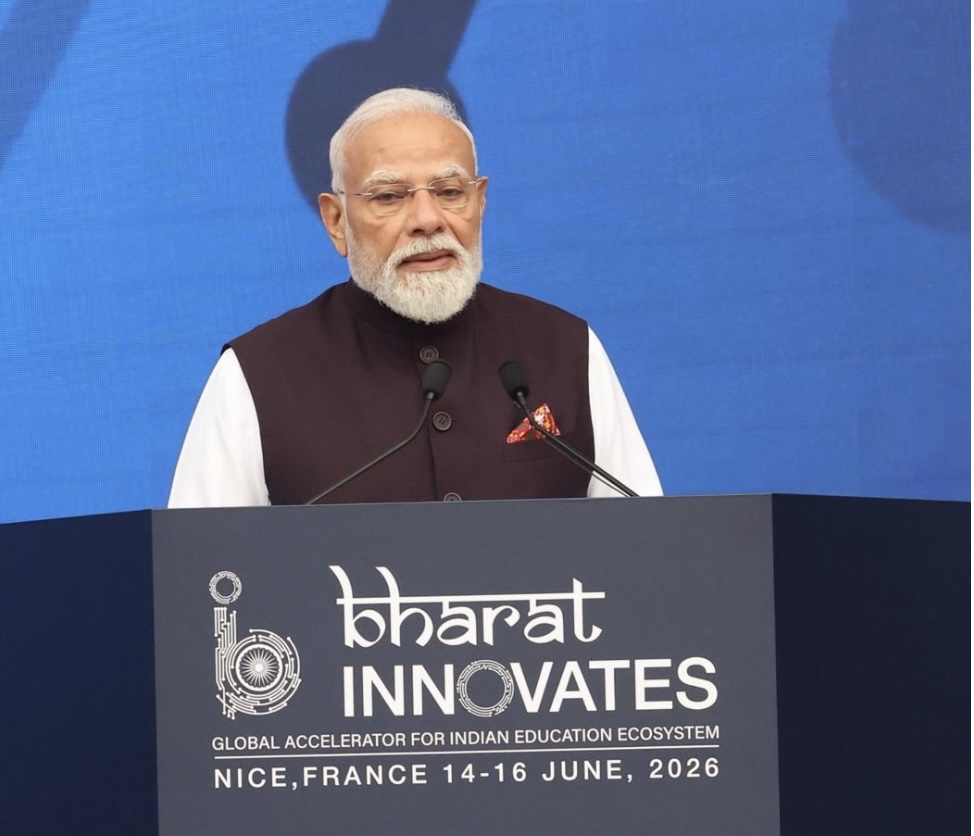
India now occupies a unique position. It is a member of BRICS, an active participant in the Quad, a strategic partner of France, a major defence partner of Israel and an increasingly influential voice in the Global South. Few countries possess such a diverse international network.
Netanyahu’s reference to India was therefore not intended to diminish the role of the United States, but rather to acknowledge a broader reality: the international system is becoming increasingly interconnected, with influence distributed among a growing number of actors.
In a sense, let us venture an analogy: this special relationship between India and the Jewish state is part of the same broader approach as the Abraham Accords, which seek to bring East and West, Israel and the Arab-Muslim world, closer together.
Michel Taube