



From 14 to 17 June 2026, Narendra Modi travelled across France, visiting what could almost be described as three different Frances: Nice, Évian and Paris.
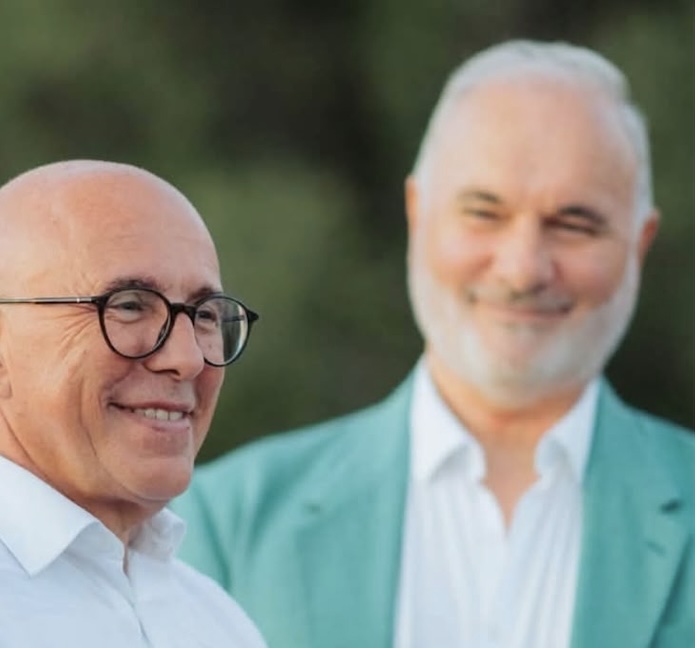
In Nice, where he was welcomed by the city’s newly elected mayor, Éric Ciotti, he focused on innovation, artificial intelligence and the technologies of tomorrow during the Bharat Innovates summit.
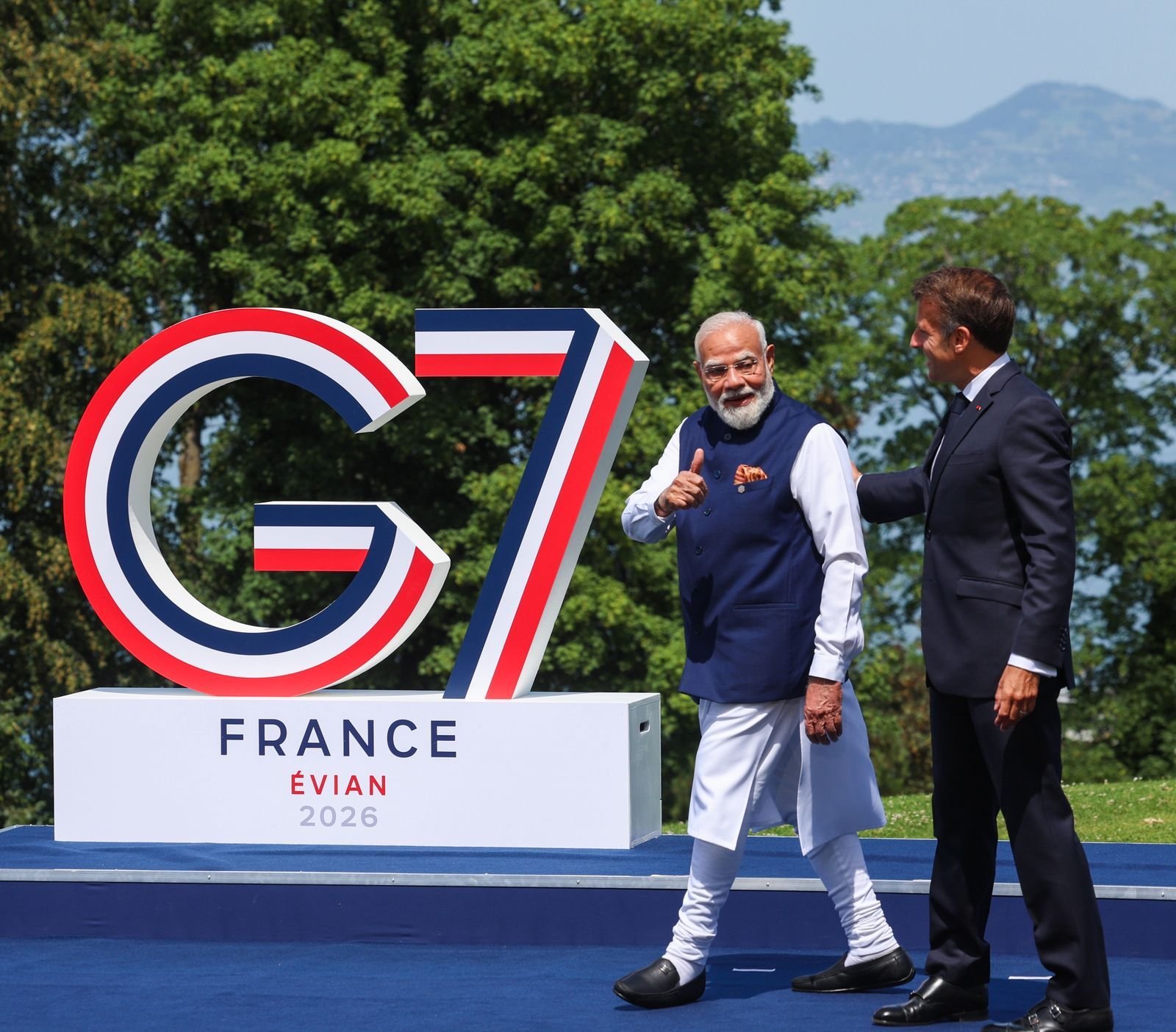
In Évian, he joined the leaders of the world’s major industrial democracies gathered for the G7 Summit. India is not a member of the G7—yet it has become an indispensable interlocutor.
Finally, in Paris, he attended VivaTech, where India was the official partner country for artificial intelligence, before meeting an Indian diaspora that continues to grow in both size and influence.
In Nice, Bharat Innovates was far more than a business showcase.
It was a declaration of ambition.
Long regarded as the world’s back office for information technology, India now seeks to establish itself as a global innovation powerhouse.
Startups, artificial intelligence, digital public infrastructure, quantum technologies and digital healthcare: Narendra Modi came to remind the world that innovation is no longer simply a driver of economic growth.
It has become an instrument of national sovereignty.
France understands this perfectly. The technological partnership between Paris and New Delhi has now reached a level that few could have imagined only a decade ago.
In Évian, the G7 Summit confirmed India’s now indispensable role in the world’s major strategic discussions. Narendra Modi joined other rising powers that embody the emerging twenty-first century within the broader G7+ format.
In Paris, India and Prime Minister Narendra Modi were the guests of honour.
Today, India boasts the world’s third-largest startup ecosystem, is home to well over one hundred unicorns, and is investing massively in artificial intelligence, digital public infrastructure and breakthrough technologies.
Every overseas visit by Narendra Modi also includes a meeting that has become a defining feature of his diplomacy: his engagement with the Indian diaspora.
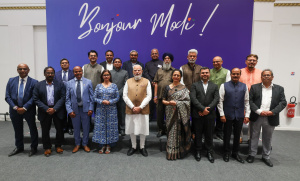
In Paris, this gathering with the Indian community was anything but symbolic [our photo].
It served as a reminder that the nearly 35 million people of Indian origin living abroad now constitute one of the world’s most influential global networks.
France is no exception. The Indian diaspora contributes significantly to academic, scientific, economic and cultural exchanges. It has become a living bridge between two democracies that discover more common ground with each passing year.
History will probably remember the images: the handshakes, the speeches, the technological demonstrations and the enthusiastic crowds.
Yet the real significance lies elsewhere.
By travelling through Nice, Évian and Paris, Narendra Modi did far more than conduct a state visit.
He illustrated the gradual shift in the world’s centre of gravity.
Since arriving at the Élysée Palace, Emmanuel Macron has regarded India as one of the cornerstones of France’s Indo-Pacific strategy, designed to anchor France within this emerging global centre of power.
Today, the Franco-Indian partnership is no longer confined to defence cooperation or civil nuclear energy.
It now encompasses multilateralism in the service of peace and humanity, artificial intelligence, semiconductors, cybersecurity, space, maritime affairs, the energy transition, digital sovereignty and industrial innovation.
In other words, it embraces virtually every domain that will shape power in the twenty-first century.
India is now the world’s most populous nation, one of the fastest-growing major economies and one of the very few countries capable of maintaining meaningful dialogue simultaneously with Washington, Brussels, Moscow, the Gulf states and the major nations of the Global South.
France shares that same strategic asset.
This capacity to maintain balance and engage across geopolitical divides is bringing France and India ever closer around a common vision of the world.
Michel Taube