



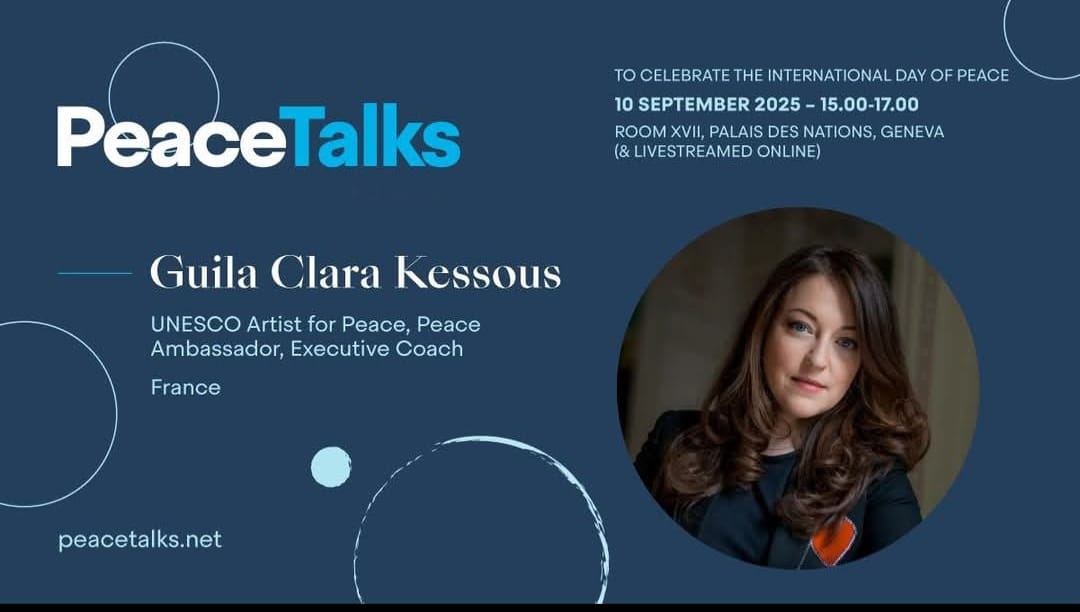
On September 10 in Geneva, during the Peace Talks celebrating the International Day of Peace, we will step before the United Nations to present a historic resolution: a demand for binding quotas to ensure women’s presence in all international peace negotiations.
It will be a world first. And it carries an urgent conviction: without women, peace is fragile, exclusionary, and ultimately unsustainable.
The numbers behind the silence
The international community has long proclaimed its commitment to women’s participation in peace and security. Resolutions, declarations, and conferences have emphasized the importance of inclusion. But the lived reality tells another story — one of absence, marginalization, and squandered potential.
Between 1992 and 2019, women accounted for only 13% of negotiators, 6% of mediators, and 6% of signatories of peace agreements worldwide. These numbers are not just statistics; they represent rooms where decisions about war and peace — about life and death — were made almost entirely without women’s voices.
The irony is painful: women make up nearly *80% of those displaced by conflict, bearing the brunt of war’s devastation. And yet, when they are present at the table, the difference is striking. Studies show that peace agreements involving women are **35% more likely* to last at least 15 years. Inclusion is not symbolic; it is strategic. To exclude women is to sabotage peace from the start.
A resolution for a different future
The resolution Kessous will put before the UN is ambitious — and deliberately so. It calls for a *minimum of 30% women* in all peace negotiation delegations, with the explicit goal of achieving parity. But it goes further, recognizing that participation is not only about numbers, but about power, resources, and sustainability.
The proposal includes:
- substantial increases in funding for grassroots women’s organizations, often the first to respond and the last to be consulted;
- the systematic involvement of civil society, ensuring peace is not confined to the interests of elites;
- an annual monitoring mechanism led by the UN to track compliance and progress;
- robust programs for training and mentorship, designed to prepare a new generation of women leaders in diplomacy and conflict resolution.
This is not a symbolic gesture. It is a structural intervention, aimed at reshaping how peace itself is conceived, negotiated, and sustained.
The woman behind the call
We are no stranger to breaking new ground. Il am the co-founder of the Sarah and Hajar Accords, conceived as the female counterpart to the Abraham Accords, and the International Women’s Accords in Diplomacy, which build frameworks for gender parity in negotiations. She also directs the Femina Vox International Forum* at UNESCO, an initiative that publishes an annual global barometer on women’s rights.
Her work has been recognized worldwide. Named “Woman of the Decade” by the Women Economic Forum, Kessous exemplifies a diplomacy that is inclusive without being naive, visionary without losing sight of practical impact. In her approach, peace is not simply the cessation of violence, but the creation of durable, equitable systems where women and men share responsibility.
The Geneva message
On September 10, as delegates gather in Geneva, Kessous will deliver a message that cuts through political platitudes and ceremonial speeches. It is a reminder — and a warning:
Peace cannot be decreed in closed rooms where only powerful men sit. True peace is co-created with women, or it does not exist at all.
This is more than advocacy. It is a demand that the international community confront its own contradictions: to stop praising women as “pillars of resilience” in times of conflict while systematically excluding them from the negotiations that determine the future.
In Geneva, we will give voice to a principle that history has too often ignored but that the future cannot afford to overlook: peace without women is not peace at all.
Women must no longer be confined to ‘setting the table’ at home — it’s time they take their place at the tables where the future of nations is decided.
Guila Clara Kessous
Ambassador for Peace
UNESCO Artist for Peace
Vice President of the UNF