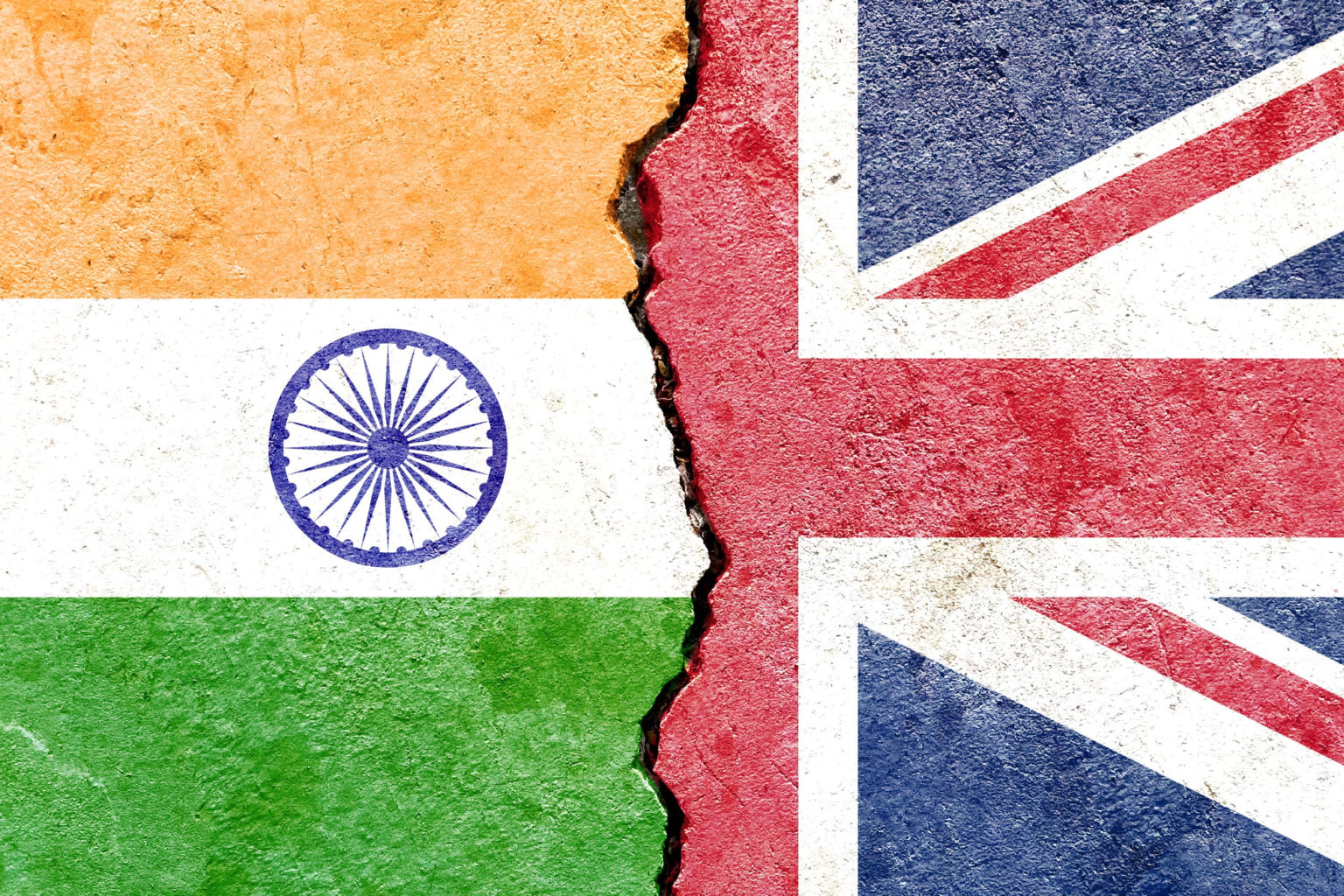




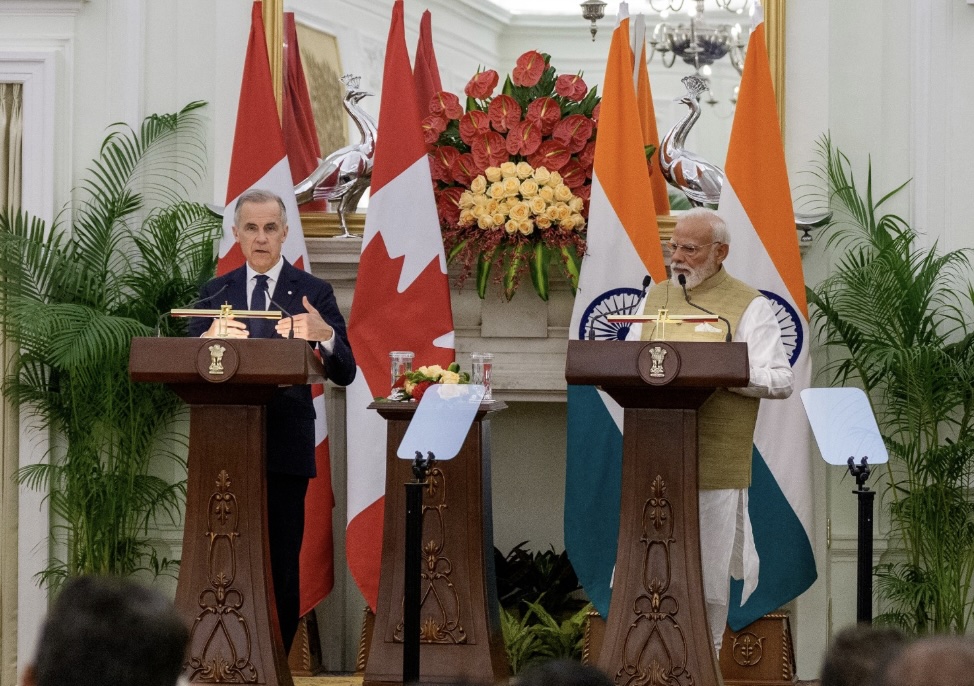
At the invitation of His Excellency Narendra Modi, Prime Minister of India, the Right Honourable Mark Carney, Prime Minister of Canada, paid an official visit to India from February 27 – March 2, 2026. A series of economic agreements were signed after months of tension. Ottawa and New Delhi appear to have chosen pragmatism — and pragmatism today bears the names energy, strategic raw materials, and the circulation of talent.
Relations between India and Canada had been abruptly darkened in 2023, when the Canadian government accused New Delhi of being involved in the assassination in Vancouver of a Canadian naturalized Sikh separatist activist. A serious diplomatic crisis followed, marked by ambassadorial recalls and acerbic statements. Yet in a world where the geopolitics of resources and technologies impose their own logic, states sometimes manage to close parenthetical conflicts to return to essentials. And essential, for these two powers, now means strategic cooperation.
On Monday, March 2, in New Delhi, Narendra Modi spoke of “a renewed sense of energy, mutual confidence, and positivity” between the two countries. Behind the diplomatic phrasing lies a very concrete reality. Ottawa and New Delhi signed several structural agreements, particularly concerning critical minerals and uranium supply. In the field of civil nuclear energy, India thus secures a long‑term supply source, while Canada confirms its role as a strategic provider in a world where the energy transition increasingly depends on rare and highly coveted resources.
The announced energy partnership is far from trivial. It is an agreement estimated at roughly 2.6 billion Canadian dollars, according to Mark Carney, who sees in this rapprochement a high‑potential strategic energy partnership. Both countries now display a clear ambition: to raise their trade exchanges to 50 billion dollars and to conclude, in the near future, a comprehensive economic partnership. In other words, to move beyond sectoral cooperation and to build a genuine economic axis between two major democracies of the Indo‑Pacific.
But the strategy does not stop at natural resources. It also touches what some diplomats now call the “intangible infrastructure” of power: talent, research, innovation. Canada used Mark Carney’s visit to unveil a Canada–India Talent and Innovation Strategy. Thirteen academic and scientific agreements were signed, ranging from joint research centers in artificial intelligence to academic exchange programs and hybrid campuses. The aim is to facilitate the movement of researchers, teachers, and students between the two countries.
Canada is well aware that it already hosts the largest population of Indian students in the world. In 2025, more than 319,000 Indian study‑permit holders lived in the country. Ottawa now intends to transform this educational flow into a strategic asset. A pilot “innovation mobility visa” could allow Indian doctoral candidates to carry out up to two years of paid internships in Canadian companies without heavy administrative procedures — a way to connect university laboratories directly with industrial needs.
Behind this multitude of agreements lies a broader strategy. Narendra Modi’s India is multiplying economic partnerships with Western powers while reinforcing its own strategic autonomy. It is negotiating with Europe — particularly with France — deepening relations with the Gulf states, strengthening ties with Japan and Australia, and now reopening the Canadian chapter. This variable‑geometry diplomacy illustrates the singular place New Delhi intends to occupy on the new global chessboard.
For Canada, this rapprochement also answers a strategic need. In a context of persistent trade tensions with Donald Trump’s United States, Ottawa is seeking to diversify its partners and secure new economic outlets. India, with its immense domestic market and rapid growth, appears to be an indispensable partner.
The meeting between Modi and Carney is therefore not merely an episode of diplomatic normalization. It also marks the affirmation of a multipolar world in which economic alliances are redrawn according to energy, technological, and human interests. And in this emerging international order, India advances with method, patience, and ambition.
Michel Taube